Analysis
Joining forces to protect vulnerable citizens: A new model for data sharing in policing


ADVERTORIAL: Despite the best intentions, vital information about vulnerable people too often sits in disconnected systems. Capita, in partnership with a police force in the North of England and a ministerial department, has proven that secure, multi-agency data sharing is not only possible, but practical, scalable and ready to use.
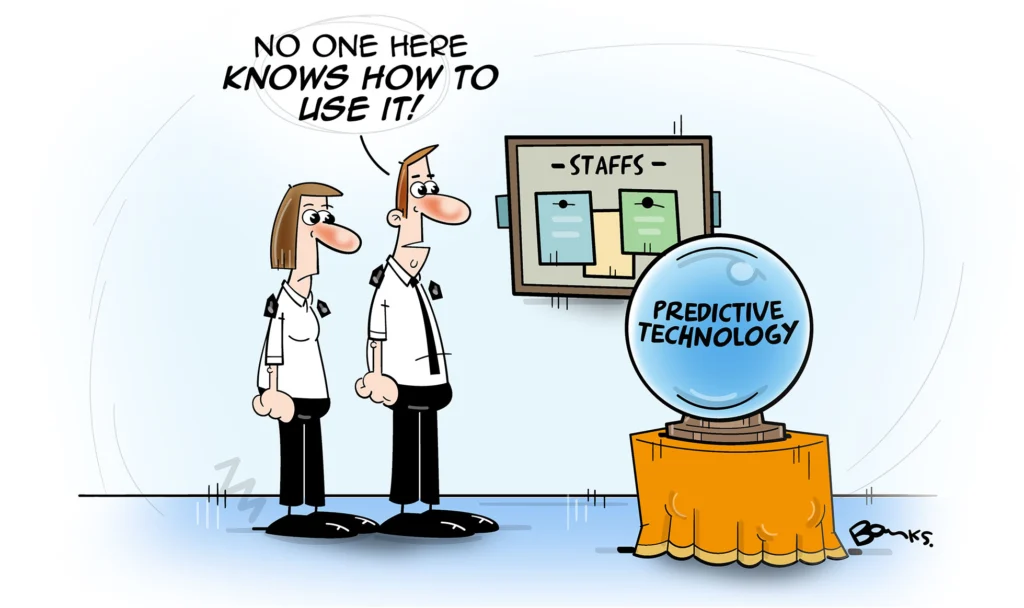
To protect citizens and prevent crime, police officers must be able to access relevant information from other public sector organisations, including social services, the NHS, and educational institutions. For example, if an alleged offender is active in the education system or has a history of poor mental health, there will be a record of touchpoints with other organisations that could support officers form a more holistic view of the individual and their needs.
Many agencies have tried to enable better data sharing, but manual processes, technical fragmentation and legal uncertainty have made progress slow. A Northern police force and a ministerial department partnered with us to overcome these challenges and deliver an effective solution. The result is a capability that is now operational and ready to go live – helping officers make earlier, safer and more informed decisions.
Challenge: A fragmented data landscape
The police force wanted to access and to proactively share data with other agencies to enable early intervention, minimise risks in the community, reduce offending behaviour, and provide relevant and timely support to vulnerable groups with complex needs. But they faced well-known obstacles:
- Disparate systems and outdated technical infrastructure
- Inaccurate, incomplete or siloed data
- Cultural resistance and uncertainty about data sharing protocols and legislation
- Limited internal resources and technical capacity
It needed a solution that could overcome these challenges by linking data from multiple agencies effectively, reliably and securely and presenting it in a unified view.
Solution: Enabling safe, cloud-based data sharing
To help the police force in the North of England address their challenges we focused on testing and adapting our multi-agency data sharing (MADS) capability for their technology environment. Built on the Microsoft Azure cloud platform, MADS uses Infrastructure as Code (IaC) to automate infrastructure setup and management – enabling consistent, repeatable deployments and reducing cost and complexity.
We developed a demonstrator pipeline, using synthetic data to simulate two source systems, one from a partner agency. Once this successfully demonstrated how records could be ingested, transformed, and combined into a single view, we moved to the force’s operational data. This was a crucial step as it allowed us to test the pipeline in a real-world situation. Using the IaC tool Terraform, we automated infrastructure provisioning across the police force’s different environments, ensuring consistent and reliable deployments.
We worked closely with the police force technical team throughout and took an agile approach to delivery through a series of sprints from discovery to deployment – whilst providing additional support and expertise in cloud technology, infrastructure, networking, and data to successfully progress the deployment. We utilised our technical skills and strong relationships with enabling partners such as Microsoft to deliver the project without changing their existing technical infrastructure.
Beyond technology: Enabling cultural change
Effective data sharing takes more than a technological solution, it needs to be supported by cultural change. Staff must understand how to identify the value of the information they have and be confident that they are allowed to share it with other agencies. To address this, we provided seamless knowledge transfer to technical team members, helping them to overcome longstanding professional anxiety around information sharing and building confidence in making appropriate decisions.
We provided detailed technical documentation and practical training to ensure the teams fully understood the development process of the solution, as well as the tools, cloud technology, and infrastructure involved.
Key benefits of the solution
- Useable, accessible data: Repeatable components developed through our experience on other policing projects enhance data quality to ensure it remains usable at the visualisation stage. This marks a step change from what other organisations have typically delivered.
- Intuitive reporting dashboards: By integrating Microsoft Power BI, we created clear, easy-to-use dashboards that give officers a holistic view of individuals, helping them make better-informed decisions.
- Secure data governance and security: Robust encryption and role-based access controls ensure information is accessed safely and in compliance with UK GDPR. The system is also designed to support the addition of auditing functionality.
Result: A proven model that effective data sharing is possible
After successfully testing and deploying the MADS capability, the Northern police force now has a powerful solution ready for operation. Officers will be able to draw on essential information across agencies – supporting safeguarding, highlighting vulnerability and spotting patterns in criminal activity earlier. All of this helps them better serve and protect the public.
This is a major achievement. To our knowledge, no other organisation has yet delivered effective, end-to-end data sharing in the public sector in such a streamlined and scalable way. Together, we have proven that agencies can improve data sharing without needing to invest in extensive, costly infrastructure changes.
Our MADS capability marks a significant advancement in data collaboration for the police force in the North of England. This solution sets a new standard in the public sector, ensuring secure and efficient data sharing. We anticipate other agencies will adopt this approach, benefiting from the well-defined IaC code supporting rapid and secure implementation.
Next steps
Learn more about this partnership and how our MADS capability can support your organisation by contacting us at bettergovernment@capita.com or visiting our dedicated MADS webpage.
Or join our live webinar “Breaking Silos: Can Multi-Agency Data Sharing Transform Crime Prevention?” on 6th Nov, 11am–12pm, hosted with Police Oracle. Register here.
Authors:
Dave Tonks
Lead for Justice & Policing, Capita, ex-Police Scotland
Dave brings extensive experience of operational policing, organisational remodelling and digital transformation to his role at Capita. Prior to joining Capita, he served for 29 years in a variety of policing roles, concluding his policing career as the operational lead for Police Scotland’s Digitally Enabled Policing Team with responsibility for designing and delivering their new national information management platform (COS).
Category: Advertorial
Job of the week
Join the RSMS Talent Pool for Direct Engagements with the Royal Turks & Caicos Island Police
- RSMS Royal Turks and Caicos Islands Police Force Talent Pool
- Islands of the Turks and Caicos
- Provided on a job by job basis
Join the RSMS Royal Turks and Caicos Islands Police Force talent Pool Help shape safer communities in one of the Caribbean’s British Overseas Territories RSMS is providing RTCIPS a service which allows the police service to make direct contact with UK law enforcement professoinals. The goal is to provide the police service with a self sufficient way to make direct contact with UK police professoinals. The service will opereate as a Talent Bank. By joining you are not being guaranteed opportunities but you are certainly placing yourself in the front of the queue when new opportunities aries. Join the Royal Turks and Caicos Islands Police Force Talent Pool Bring your law enforcement experience to a dynamic, multi-island policing environment
Read moreCoffee break