Article
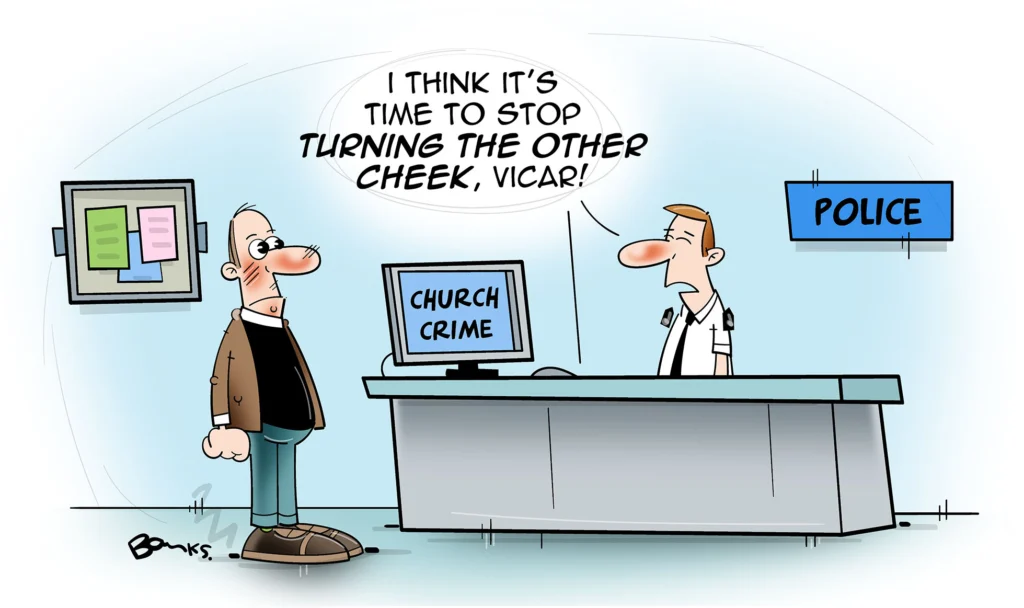
Viewpoint: The Policy Exchange, the Met and public order

Chris Hobbs takes issue with the Policy Exchange's criticism of Met public order tactics when dealing with protests.
Pitched into the interminable debate on policing, is a Policy Exchange group report on the Metropolitan Police which focuses on the stewardship of its Commissioner, Sir Mark Rowley.
Those reading it, unaware of its origin, could be forgiven for assuming that the 49-page document is the work of Her Majesty’s Inspectorate of Constabulary with different areas of policing being awarded a grade.
The more observant however, will have noticed that there is a forward by the Conservative Shadow Home Secretary, Chris Philp. This betrays the fact that the Policy Exchange is generally regarded as ‘leaning to the right’ of the political spectrum. It will also act a reminder to any alert reader that it was the Conservative Party which took a wrecking ball to UK policing from which it is yet to recover.
This article focuses on the stinging criticism delivered by the author in respect of the Met’s public order policing but there is much else in the report that is worthy of merit together with a useful compilation of meticulously gathered statistics. The Met is struggling in many respects but the report also notes improvements and achievements over recent years.
The Met and protests
Much criticism of the Met’s handling of protests is based around the events since the 7th of October 2023, the date of the Hamas massacre of the innocents which was rapidly followed by the first pro-Palestine protest close to the Israeli Embassy. This protest appeared to be a mixture of celebration and apprehension, the latter in relation to the inevitable retaliation by Israel. The full horror of what had occurred as a result of the incursion, was only starting to become apparent.
There then followed a succession of protests and the report quotes Assistant Commissioner Matt Twist who admitted that the Met had lessons to learn from those early events. What the report fails to acknowledge is the rapid learning curve that the Met, its commanders and officers on the ground had to negotiate during those early days.
Suddenly posters, placards, flags and even chants became actionable in a way not seen before, even during Palestine linked crises of previous years. Front line officers were expected to make instant decisions such as whether a black flag featuring Arabic script was glorifying ISIS; were chants calling for Jihad an offence or indeed chants referring to the ‘Intifada?’
Police deputed to attend these protests were, and are, often subjected to the ‘please Miss’ syndrome whereby protesters from either side rush up to officers demanding they take immediate action over a poster, placard or chant. The Met have now developed more sophisticated methods of dealing with transgressions of this nature that break the law but unfortunately, they are not referred to in the report.
Policing protest around Parliament
The report also complains that police do little to deal effectively with protests that take place outside Parliament itself thus hindering the egress and ingress of members of the Commons and Lords plus staff. It refers to one protest where Parliament was ‘surrounded’ during a working day by pro-Palestine protesters dressed in red to symbolise the bloodshed in Gaza.
In fact, many of those protesting were those who could best be affectionately described as ‘leftist crusties’ and indeed over more recent weeks were probably hauled away by police after sitting down and displaying Palestine Action placards.
There was one scuffle during a generally uneventful day outside the gates used for vehicles entering and leaving the estate. In fact, most of those working within Parliament can and do, enter and leave via other routes which means they don’t have to endure jostling with tourists when using the tiresome traffic light crossings.
The report implies that police fail in their duty to Parliamentarians and others who work in Parliament despite having sufficient powers. This, in turn, seems to suggest that those in Parliament want to curb protests in and around Parliament Square and it’s the police who ‘go their own way’ in terms of enforcing or not, public order legislation.
If the law-makers wished, they could impose draconian laws in respect of the areas around Parliament Square and along Whitehall which would ban all demonstrations and protests in that area effectively making a large area of Westminster an ‘exclusion zone.’ That they choose not to do so suggests that not only do they lack the will but are only too well aware that such legislation will incur ‘freedom of speech’ criticism which would stretch across the political spectrum.
Criticism of post-event arrests
The report also absurdly criticises the Met for not making arrests ‘at the time’ and suggests an over-reliance on ‘post event’ arrests. Such an allegation beggars belief. Very often, during a dynamic situation, officers present have to keep both sides separate which normally involves two handed pushes or, in extreme cases, batons. Making wholesale arrests would take officers away from the incident. As has been seen in Palestine Action protests, even where arrests are made of totally passive activists, it still takes four or five officers to carry the prisoner to police transport.
Imagine a violent protest, where the arrested prisoner is putting up a fight and is being supported by other protesters. Current tactics, when an arrest is made, is to form a protective bubble around the arresting officers and the prisoner. That ‘bubble’ now moves as a unit with the prisoner, to prisoner transport or at least to the relative safety of behind a police cordon.
Given the number of officers involved, making wholesale arrests can quicky, as indicated above, denude a serial of its officers which carries its own potential dangers.
Two tier policing allegations
The author of this report has also endorsed the view from those on the right, that protests see ‘two tier’ policing where pro-Palestinian/Muslim activists are treated more favourably. No mention in this report however as to the fact that pro-Palestinian, anti-racist and Muslim organisations also accuse police of two-tiered heavy- handed policing.
Two months after the 7th of October massacre the Islamic Human Rights Commissions issued a press release which included the following:
“Twelve British human rights and media organisations have written to the head of the Metropolitan Police, Sir Mark Rowley, to protest about the force’s handling of pro-Palestine demonstrations in the capital.
The letter says that the Met has allowed itself to be influenced by the highly inflammatory and politicised representation of these demonstrations by their detractors in the media, government and Zionist lobby. This has led to the implementation of a biased policing strategy which is heavy handed and excessive for pro-Palestinian demonstrators but overly indulgent towards pro-Zionists who appear to be breaking the law.”
More recently in May 2025, the Muslim Association of Britian stated the following as part of a submission to Parliament:
“This is especially alarming in the current context. Pro-Palestine protests, attended by hundreds of thousands across the UK, have been peaceful and orderly-something even police forces have acknowledged. Despite this, they have faced disproportionate policing: widespread use of Section 12 and 14 conditions, exclusion zones, surveillance, and pre-emptive arrests.”
UKIP and Whitechapel
The report takes specific aim at a proposed UKIP rally that was due to take place in Whitechapel in October. UKIP are regarded by those on the left as far-right racists and this evoked comparisons with the Battle of Cable Street in 1936 when Mosley’s fascists were prevented from marching through the East End and the Battle for Brick Lane in 1978, when the racist murder of Altab Ali after a series of attacks on Asians by skinheads, saw thousands take to the streets.
Conditions were imposed on the UKIP organisers that effectively resulted in them having to stage their protest some distance away in central London. The report does acknowledge the likelihood of serious disorder and indeed, having been there on the day in question there is no question that this would have been the case.
Hundreds of masked Asian youths dressed in black were clearly visible in addition to several thousand predominately white anti-racists. The potential confrontation brought back personal memories when, as a young PC at Southall I experienced the Blair Peach riot when the National Front held a meeting at Southall Town Hall and the Hambrough Tavern riot which occurred when punk groups from the far right staged a concert at the Southall pub which was burnt to the ground. During the latter I ended up at Ealing hospital having been knocked unconscious by a brick which perhaps has jaundiced my views on the issue.
The report goes on to, in effect, state that the Met is biassed against those of the Jewish faith and too willing to accommodate Muslim organisations. This view is shared on social media by those on the far right, where there is an abundance of Ai cartoons showing the police grovelling to Islamists.
In making these assertions, there is no mention of the substantial Jewish bloc which includes descendants of holocaust survivors and who can be seen present at all Palestine Solidarity Campaign marches. Neither is there any mention of the Jewish anti-Zionist group Neutrei Karta who can be seen at most anti-Israel, pro-Palestine events.
They are clearly visible in their traditional dress although they are despised by mainstream Jewry. Having said that, there can be no doubt that amongst the many thousands of pro-Palestine protesters, there are those who back Hamas; placards stating ‘Resistance is Justified’ have been queried by officers but deemed not to be actionable.
Banned from the vicinity of a synagogue
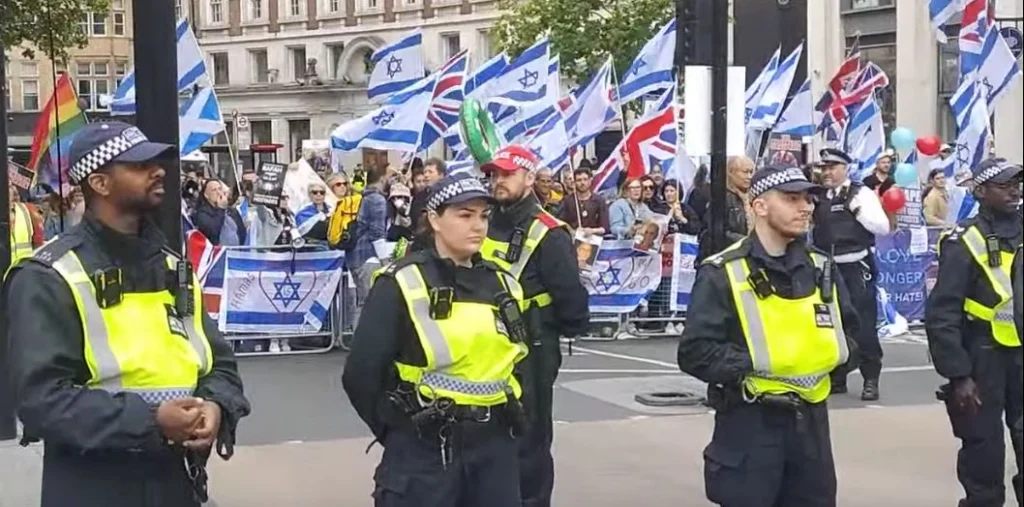
No mention either of the Met effectively imposing a ban by means of public order conditions on a Saturday PSC march commencing at the BBC HQ in Portland Place due to the proximity of a nearby synagogue. At the end of the PSC rally, participants tried to push their way through a Met police cordon in Whitehall on the pretence of laying flowers in Trafalgar Square. The Met withdrew the cordon due to the presence of small children amongst the crowd.
That the pro-Palestine protesters intention was to march to the BBC became clear as they swarmed into Trafalgar Square and immediately made their way across the Square to an exit that would take them to the Haymarket and onwards to the BBC thus breaking conditions. However, in what was referred to as a cunning plan, the Met blocked off that exit and then all other exits from Trafalgar Square before making dozens of arrests for failing to comply with conditions. That incident provoked outrage amongst pro-Palestinian groups and was hardly the actions of a force pandering to the wishes of extremists.
Stop the Hate counter-protests
When PSC marches have taken place, they have prompted, until recently, a static pro-Israeli counter-protest organised by Stop the Hate (STH). These have only attracted between two and four hundred noisy but well- behaved counter-protesters. These have always been well protected from passing pro-Palestinians by police cordons and barriers but STH have now withdrawn cooperation from police alleging, as does the author of this report, police bias towards pro-Palestinian and Muslim groups. The catalyst was a short notice Sunday pro-Palestine protest outside the St. John’s Wood synagogue. This was, for the police, a protest against an Israeli linked event where there would be no policing plan. The STH claimed that the police response was ineffective hence the withdrawal of cooperation.
The report goes on to suggest that the Met failed to make use of its powers in order to prevent disruption and disorder. In fact, as any police officer who polices these events will testify, these large PSC marches whilst causing disruption to traffic, very rarely see disorder which could be classified as serious. Most, therefore, pass off without significant incident and it is the smaller, ‘emergency’ protests generally populated by more youthful elements, that see a degree of disorder.
The Met have raised the issue of the frequency of these protests but again this is a matter for government and Parliament. Linked to this is conjecture that the frequency of the protests raises tensions. If the Met attempted to curb the frequency of all protests however, there would unquestionably be an outcry in relation to freedom of speech and freedom of protest.
Unite the Kingdom
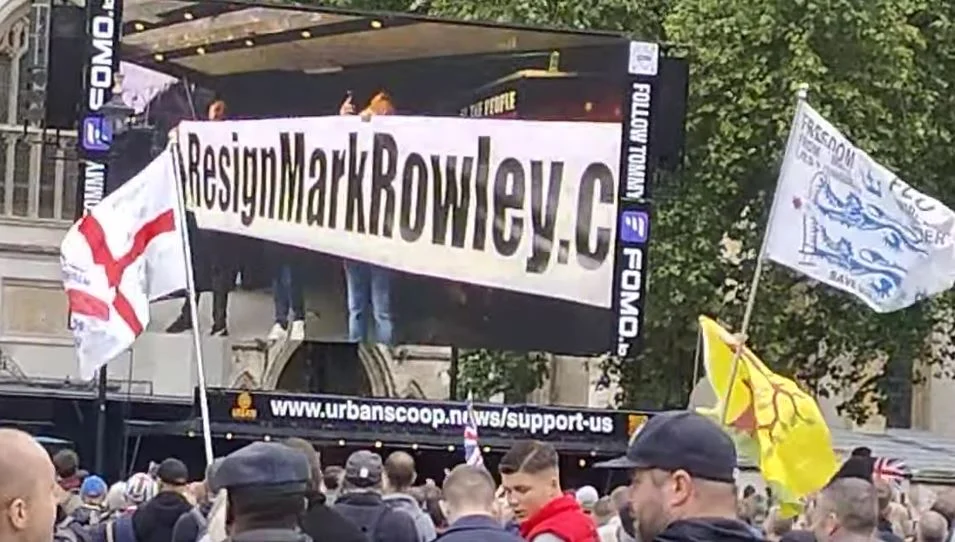
Interesting that there was no mention of the Unite the Kingdom (UTK) protest that proved a major challenge for the Met and caused massive disruption due to the numbers attending. Had the author studied events, he would have seen that the 100,000 who turned up presented problems for the police in terms of the sheer weight of numbers.
He would also have found that hundreds of UTK protesters who found their way into the area designated for several thousand anti-racist protesters, attempted to break through the police cordon in order to attack their rivals. The anti-racists had no-where to flee to but the Met line held and, later, those several thousand anti-racist protesters were extracted in a well-executed police operation.
For a force that is supposed to be biassed towards the Palestinian/Islamist cause, the fact that literally hundreds of pro-Palestine Action supporters have been arrested by Met officers for breaching terrorist related legislation would surely bewilder the uninformed observer
This response to ‘A Long, Long Way to go’ is, as stated above, primarily concerned with the section that deals with public order, where much of the criticism appears to rely on hearsay from those on the right of the political spectrum.
Policing public order events is complex and unpredictable where events can change dramatically by the minute. Poor decisions can made as illustrated by the late decision to ban tractors from attending the recent farmer’s protest; a decision that literally saw groans of despair from officers who were expected to enforce that edict.
Occasionally the risk assessment can be wide of the mark as occurred at a Trans community protest following the well- publicised Supreme Court decision. A few hundred trans activists were expected to materialise in Parliament Square on the following Saturday. In fact, the Square was full to overflowing with thousands of Trans activists and supporters.
There is much, however, within this report that is relevant and will resonate with officers. The section on policing protests may have garnered some approbation had there been mention of the fact that officers are now ‘protest weary’ and tired of spending hours standing on cordons or sitting in carriers when they could be performing duty on their own boroughs.
This is turn is contributing to the dramatic loss of morale that is resulting in officers leaving the Met or seriously considering doing so.
It is also unfortunate that reports of this nature fail to balance criticism with the many acts of bravery, kindness and compassion performed by officers during each and every 24- hour- period.
The tragic, murderous terror attack in Bondi will doubtless raise tensions in the UK and has the potential to stretch the British police service to its absolute limits in ensuring the safety of all. The recent reported foiled plot in Germany to attack a Christmas market, will exacerbate those tensions although the actions of Ahmad Al Ahmad, a Muslim who was seen disarming one of the Bondi Beach gunmen and was wounded whilst doing so, may help temper the angry reaction of some.
Although no major protests appear to be scheduled in London between now and Christmas, that situation may well change and indeed at the time of writing members of capital’s Jewish community have gathered outside the Australian High Commission to express their anger and sorrow at the incident.
It’s also perhaps worthy of mention that armed police patrols in the UK of Christmas markets have, thus far, been the subject of stinging criticism on social media.
Critics will, of course, be aware that our ‘two tier’ police successfully continue to frustrate terrorist activity and, like their Australian counterparts, will and indeed have, run towards life-threatening terrorist incidents regardless of risk to themselves. How predictable that the efforts of Australian police officers, responding to the incident and armed only with handguns, are now being criticised by the legions of keyboard warriors. Two officers suffered gunshot wounds before the death of one terrorist and the capture of another.
Perhaps, given complex current events, tensions and threats, those across the UK’s political spectrum will now rally behind the police during the challenging times ahead. I won’t be holding my breath and neither will those officers performing duty at the ‘sharp end.’
Chris Hobbs is a former Special Branch officer who follows protests as an observer for Police Oracle.
Category: Public Order
Some of these critics are like spoilt ignorant children. They baselessly whinge and whine without knowing the facts, but we all know would expect police to help them in an instant
Advertisement
Job of the week
DEPUTY COMMISSIONER OF POLICE
- Royal Cayman Islands Police Service
- Cayman Islands
- CI $121,356.00 – $155,316.00 per annum
The Deputy Commissioner of Police provides strategic leadership in support of the Commissioner of Police to ensure the effective management, direction, and oversight of the Royal Cayman Islands Police Service (RCIPS). The role is critical to advancing national security, enhancing public safety, and sustaining public trust across the Cayman Islands. The post holder is responsible for leading the development and execution of policing strategies, overseeing operational and organisational performance, and ensuring compliance with legal, ethical, and professional standards. The Deputy Commissioner also serves as the principal liaison with government entities, community stakeholders, and international partners, and assumes full command responsibilities in the absence of the Commissioner.
Read moreCoffee break