Article, Analysis
Certification in video processing and analysis. Is it needed and why?


AVERTORIAL: By Emi Polito, CFVA, Trainer and Technical Support Specialist, Amped Software PCC
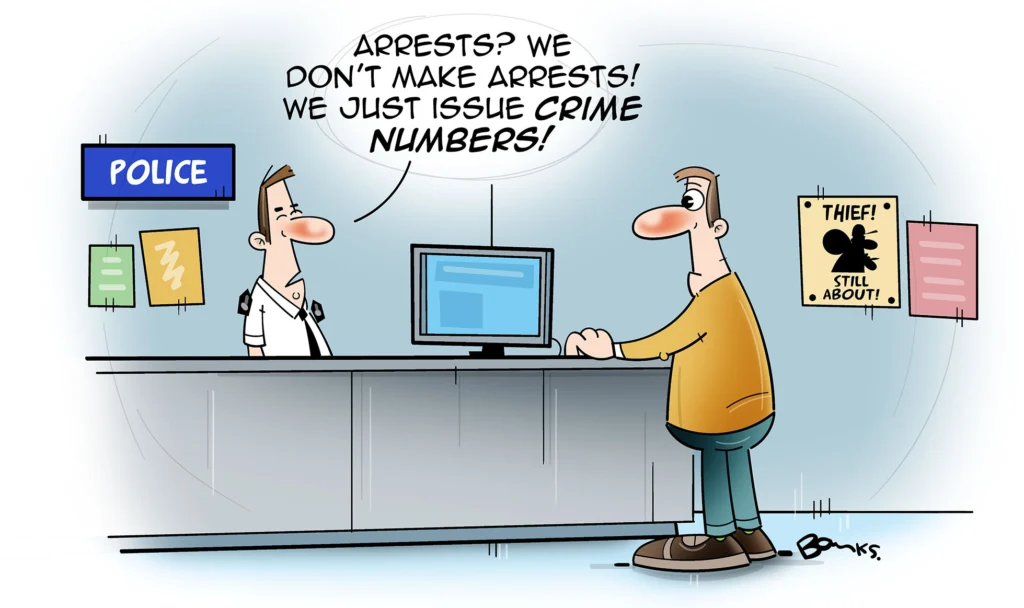
Those of you who have been working in forensics long enough will know the importance of demonstrating that you are now competent to do your job. For traditional forensics, a professional development plan has been in place for a considerable amount of time. For digital forensics and especially video forensics, however, it is (or has been) a different kettle of fish altogether.
When I joined the Police so many years ago, there were no formal requirements to be a forensic video technician or analyst. A good aptitude towards computing and some experience (professional or otherwise) with media was enough to get you through the door. And you would then learn your trade in time. This model works with most professions, of course, but in criminal justice the risks of not doing the job right or making mistakes is simply too high. Which is why more formal regulations have now been introduced in the U.K. to mitigate such risks.
Forensic Regulations in the UK
As of the 2nd October 2023, the Forensic Science Regulator decrees that a recognized laboratory accreditation (such as ISO17025 for example) is required in order to perform forensic video processing work in conjunction with a criminal prosecution. The process of obtaining such accreditation standards is challenging, time-consuming and expensive.
But despite the hurdles, the model is designed specifically to ensure forensic evidence is of the highest possible quality, free of error and, when applicable, free of bias. It is, at the end of the day, what is expected from our criminal justice system in order to retain (or restore) public trust. And therefore it must be welcomed with open arms.
As you may imagine, equipment, procedures and personnel are now more than ever before under constant scrutiny for the sake of retaining quality standards. Competency of personnel, specifically, is of paramount importance.
Before a practitioner is deemed competent, he or she needs to undergo a thorough and fully auditable personal development plan, monitored by a qualified peer (and mentor) and supervised by a unit head. For skilled work such as forensic video processing and analysis, certification may and probably will be required by your organization in order to prove relevant competency in the job that you do and the equipment that you use.
Accreditation: proficiency, validation and certification
We can identify three pillars of laboratory accreditation: proficiency testing, validation and certification.
Proficiency testing is put in place to ensure the lab procedures are fit for purpose. Usually, such tests are performed by third-party organizations that have an understanding of how to assess a specific forensic discipline, recommending action plans when such procedures are not watertight.
Validation is the process of ensuring the equipment in use produces accurate and consistent results. When it comes to video forensics, this usually involves processing a number of known videos (or test cards) as if they were live tasks and ensuring the output meets the required expectations. Validation is also an analytical safeguard to ensure results can be reproduced by using two or more different methodologies. When trying to estimate the height of a subject on CCTV, for example, it is important to validate the results obtained via Single View Metrology with those obtained using reverse projection, ensuring there are no concerning differences between the two.
Then we have certification: the process of demonstrating competence by means of examination. This is now very important. To demonstrate such competence, it may no longer suffice to attend a training course, for example. You may actually need to take an exam. And pass it, of course.
Which training certification do I need?
For forensic video processing and analysis there are several training and certification programmes available. These are designed to teach a practitioner the required technical elements of the discipline at large, including the fundamentals of analogue and digital video recordings, the best practice in downloading CCTV from a scene of crime and the clarification of low quality imagery.
In the U.K. for example, the National Police Chief’s Council (NPCC) now provides a level tier CCTV training programme designed to ensure that all Police staff and officers involved in procuring CCTV evidence have the required knowledge of how to do so in a safe and sound forensic manner.
In the US and worldwide, the Law & Emergency Services Video Association (LEVA) offers two certification programmes: one for Video Technicians who regularly process video and the other for Video Analysts, who actually offer expert opinion in court based on video examinations. Both programs involve challenging training and examination, based on theoretical and practical elements of forensic video processing and analysis.
But remember, education should always be a right and not a privilege. You will find plenty of bodies who offer and share knowledge on everything video forensics, for free. One that is widely recognized as offering the best practices in this field is the Scientific Working Group on Digital Evidence (SWGDE). All approved documentation is available for free on their website.
Vendor training and certification
Another type of certification that will benefit agencies seeking lab accreditation is that offered by software vendors, because it serves to demonstrate that a practitioner is competent enough in using a specific software application required by the job.

Amped FIVE is a recognized software product used by thousands of law enforcement users worldwide. It is used by forensic video units for the processing, analysis, clarification and presentation of video material during an investigation or a court case.
And Amped Software offers a variety of different training programmes aimed at providing the practitioner with all the theoretical and practical knowledge they need in using the software in a forensically safe and productive manner. The company offers a main training course for the beginner and intermediate user as well as an additional course and dedicated modules for the more advanced users. These modules cover more detail on topics such as video file analysis, understanding measurements and speed estimation, or video evidence presentation. There is also a certification programme available based on training and online examination.
Amped FIVE Certification
If you use Amped FIVE routinely and work in an accredited lab environment then you may be pleased to hear that there’s the possibility of becoming an Amped FIVE Certified Examiner (AFCE). This certification will be looked at favorably by your accrediting body when you are required to produce records of competency and continuous development.
Prerequisites for the certification include a recent attendance to an Amped FIVE training course and passing an online examination designed to test the student in all the main theoretical and practical elements of the training. For more information visit this page.
Conclusions and recommendations
So, where to go from here? It is always a good idea to speak to your bosses and/or your quality assurance department to see if they can help you with your own professional development, as this will ultimately benefit the organization as well as yourself. An annual performance review meeting is always the best time to start such a conversation.
Our industry changes rapidly and so we need to keep up with its ever changing demands. Training is one of those elements that can always be revisited to accommodate the growing needs of your organization. And, although no vendor certification equates to tangible expertise in forensic video analysis, it will certainly help to demonstrate that you have passed an examination designed to test your ability to use the software, both from a theoretical and practical point of view.
Emi Polito is a LEVA Certified Forensic Video Analyst and an expert in CCTV recovery, enhancement and analysis. He has worked as a forensic video/audio analyst and ISO17025 CCTV technical lead for a number of Police forces and leading forensic providers. He also regularly provides testimony in court as an expert witness in the UK.

Category: AdvertorialInnovation
Tags: ForensicsFree ArticlesSoftware
Advertisement
Job of the week
DEPUTY COMMISSIONER OF POLICE
- Royal Cayman Islands Police Service
- Cayman Islands
- CI $121,356.00 – $155,316.00 per annum
The Deputy Commissioner of Police provides strategic leadership in support of the Commissioner of Police to ensure the effective management, direction, and oversight of the Royal Cayman Islands Police Service (RCIPS). The role is critical to advancing national security, enhancing public safety, and sustaining public trust across the Cayman Islands. The post holder is responsible for leading the development and execution of policing strategies, overseeing operational and organisational performance, and ensuring compliance with legal, ethical, and professional standards. The Deputy Commissioner also serves as the principal liaison with government entities, community stakeholders, and international partners, and assumes full command responsibilities in the absence of the Commissioner.
Read moreCoffee break