Article
Policing trains you to switch on. But who teaches you to switch off?
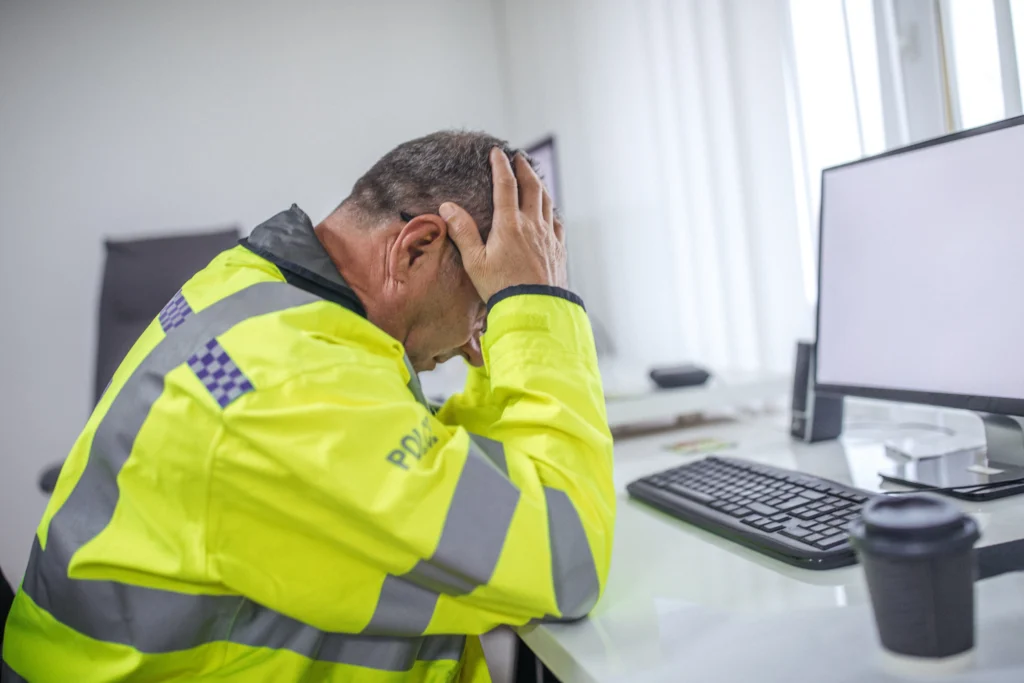

Former Met officer Natalie Rivens says policing teaches officers to be alert but some struggle to sleep even whey they are exhausted.
One of the things I never really thought about when I was a police officer was how good the job teaches you to become at being alert. You notice things. You watch people’s hands, pick up changes in tone and body language, think about what could happen next and automatically work out where the risk might be. You can be having a completely ordinary conversation one minute and dealing with something serious the next. After a while, much of that becomes second nature.
That is exactly what you want when you are at work. The problem is that your brain does not necessarily know that the shift ended when you took your uniform off.
A lot of officers will know the feeling. You get home exhausted but somehow you are still switched on. You might sit down but not really settle. You notice the noise outside. You are more irritable than you want to be. Your partner is talking to you and you know you are only half listening. Sometimes you replay something from the shift, but often there is not even an obvious reason for it. Nothing is wrong. You simply do not feel properly off duty yet.
At the time I was serving, I would never have described this in terms of the nervous system or neuroplasticity. It was just part of policing. I understand it very differently now.
I now work in nervous system and neuroplasticity education at re-origin, and one of the things I find fascinating is just how capable the brain is of learning through repetition. We normally think of that as a good thing. It is how somebody goes from being a probationer who has to consciously think through everything they are doing to an experienced officer who can assess a situation almost automatically.
The same learning applies to alertness
If your working life repeatedly asks your brain to scan, anticipate, react and stay ready, it becomes very efficient at doing it. The nervous system is constantly learning what deserves attention and what it thinks you need to be prepared for. When a pattern has been practised hundreds or thousands of times, it does not necessarily disappear because you have driven home.
That does not mean police officers are damaged or that every officer is traumatised. I think we need to be careful about that language because alertness is an appropriate response to an occupation in which situations can change extremely quickly.
There is also research showing that police officers can have quite significant physiological responses during operational incidents even when their own perception of how stressed they feel does not change to the same degree. That makes sense to me. Police officers get very good at functioning while activated. Feeling capable does not necessarily mean your body is doing nothing in the background. Where it can become difficult is when the system gets extremely good at switching on and less practiced at switching back off.
That can show up in lots of ordinary ways. Some officers struggle to sleep even when they are exhausted. Some find themselves watching people or assessing environments without consciously choosing to. Others feel restless when everything is quiet or need constant stimulation to feel comfortable. For some people it is irritability, tension, headaches or feeling as if they cannot completely relax.
None of those things automatically means there is a psychological disorder. They can also have many different causes, and persistent physical or mental health symptoms should always be properly assessed rather than simply blamed on the nervous system.
But I do think there is a gap in the way we talk about police wellbeing. We tend to talk about what happens once someone is really struggling. We talk about burnout, trauma, sickness absence, PTSD and access to support. Those conversations are essential, especially when policing is under enormous organisational pressure, but there is another conversation we could be having much earlier.
How do we help officers become better at coming out of operational mode before things reach that point?
I do not think the answer is another complicated wellbeing routine that somebody has to find 45 minutes to complete after a ten-hour shift. Most officers I knew would have laughed at that, and probably quite rightly.
What can help is creating a very small transition between work and home.
It might begin before you even get out of the car. Rather than immediately reaching for your phone or mentally running through the shift again, spend a minute noticing where you actually are. Look around you. Feel the seat underneath you. Allow your breathing to settle naturally. Drop your shoulders if they are somewhere near your ears. Remind yourself that, for this moment, there is nothing you need to deal with.
This is not positive thinking and it is not pretending the shift did not happen. You are simply giving the brain some new information. The environment has changed. The demands have changed. You are no longer required to respond in the same way.
Then do something ordinary that belongs to home rather than work. Change your clothes. Have a shower. Walk the dog. Put some music on. Talk to somebody about something completely unrelated to policing.
None of those things looks particularly impressive written down, but that is partly the point. The brain learns through repeated experience. Small things done consistently can become cues that one part of the day has finished and another has begun.
At re-origin, much of our work is based around helping people notice protective patterns, settle the immediate response and repeatedly practise something different. Over time, that repetition matters because the goal is not simply relaxation. It is flexibility.
For a police officer, you do not want to lose the ability to become alert quickly. You need it. The aim is to retain that ability while also making it easier to recognise when it is no longer required.
I also want to be very clear that this is not about putting the responsibility for police wellbeing back onto individual officers. No breathing technique or nervous system exercise is going to solve inadequate staffing, relentless demand, cancelled rest days, poor management or excessive workloads. Those things need addressing at an organisational level.
But there is a large space between feeling completely fine and reaching a crisis point. That is where I think understanding the nervous system and neuroplasticity can be genuinely useful.
Police officers spend years learning how to respond when something is wrong. We practice it, test it and repeat it until a lot of it becomes automatic.
Perhaps we should give a little more attention to what happens when nothing is wrong anymore.
Policing becomes very good at teaching people how to switch on. We could be much better at teaching them how to switch off.
Natalie Rivans is a former metropolitan police officer and co-CEO of re-origin, an online neuroplasticity and nervous system education platform that helps people understand and work with learned protective patterns through brain retraining, nervous system regulation and somatic approaches. More information is available at www.re-origin.com.
Category: Wellbeing
Advertisement
Job of the week
Police Sergeant – Ascension Island

- Ascension Island Government
- Ascension Island
- £23,968.00 per annum plus food and utilities allowances, free housing and other benefits
This is a unique opportunity to take on a key operational role within the Royal St Helena Police Service on Ascension Island. Working closely with and supporting the Police Inspector, you’ll help provide effective day-to-day supervision, maintain high professional standards and ensure the team delivers a responsive and community-focused policing service. You’ll be a visible and approachable presence for both colleagues and the wider community, offering guidance, making sound operational decisions and helping officers develop their skills and confidence. This is a varied, hands-on role for an experienced Sergeant who enjoys supporting leadership, strengthening a team and making a genuine difference within a close-knit island community.
Read moreCoffee break