Analysis
Eyewitness: More protests and more stress on a workforce struggling with morale

Here, Chris Hobbs looks at the past weekend of protests in and around London.
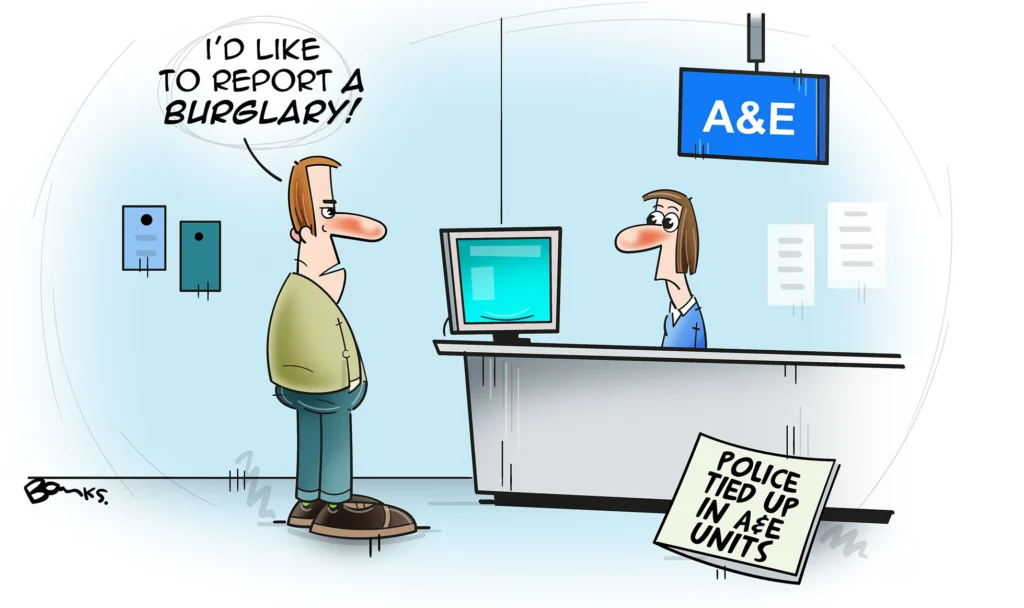
When I’m out and about at public order events, one of the questions I’m asked by officers follows the theme as to whether I’d like to be ‘in the job today.’ My answer, I’m afraid, is an emphatic no, and one of several reasons would revolve around the demands placed on front-line officers in terms of their frequent public order abstractions for ‘aid.’
I’m unsure whether the current rumour, namely that the number of public order-trained Level 2 officers in the Met has reduced from 5,000 to just over 2,000, is true, and even if this is emphatically denied by the Met, the fact that it is circulating at all should be a cause for concern.
Of course, there are many other reasons other than public order, for unrest and discontent within the Met’s front line, but on Saturday, officers had again to deal with a potentially challenging day of events which took officers away from their local areas, leaving colleagues to carry the load.
Juggling competing protests
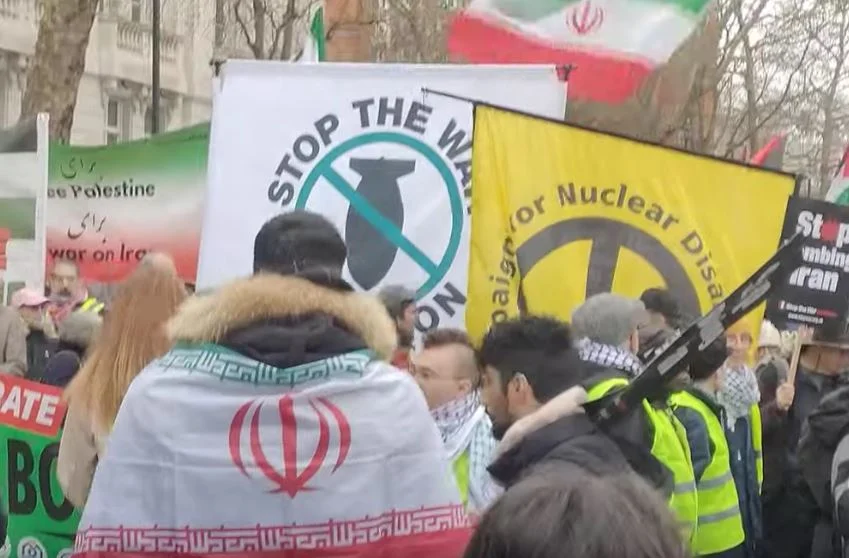
Saturday saw the Met having, again, to ‘juggle’ competing protests in order to ensure that those with opposing views did not come into conflict. The biggest protest was the ‘Stop the War’ march and rally linked primarily to the USA’s attack on Iran; the event still, however, featured issues surrounding Palestine, with Israel appearing prominently on posters and placards.
The first question that inevitably posed itself involved the level of support that would be shown for the Iranian regime; that question was soon answered by the initial appearance of a few distinctive Iranian ‘regime’ flags that soon became a profusion. Placards featuring the now deceased Ayatollah Khamenei’s image also began to appear as the crowds grew. There was also a small Kurdish presence based on a community centre, but there was no visible Kurdish flag. The various Kurdish organisations are, of course, opposed to the current Iranian government, but this small group didn’t attract any animosity.
The march from Millbank to the US Embassy would, I was told, inevitably attract the attention of pro-Israeli, pro-USA supporters, and so it proved. At the junction with Lambeth Bridge, a lone individual trying to unfurl an Israeli flag was engaged in debate with a well- known and popular Met liaison officer.
Further on, on a raised path overlooking the Thames running parallel to the road, familiar pro-Israeli faces could be seen, which included two ‘inserts’, those who, in the past, deliberately placed themselves in the midst of Palestine protests hoping to provoke a reaction.
On this occasion, the inserts and their fellow counter-protesters kept themselves apart from their rivals by remaining on the raised path. This also had the benefit of a steel fence
that ensured their relative safety from those hurling insults, and their response was to hurl jeering insults in return.
Despite the animosity, no one was assaulted, and the march proceeded to Nine Elms, where the US Embassy is situated in a location chosen for its ability to be secure. Officers were clearly visible at potential points of access, and further along, past a Waitrose, a temporary stage had been erected. Such was the density of the crowd, many couldn’t get within viewing distance of the stage; however, there were other attractions, including drum and chant ‘fests.’
The Minab School tragedy
There was one section of the road which attracted considerable attention; it had been set up as a form of tribute shrine to the young Iranian victims of the Shajareh Tayyebeh girls’ elementary school in Minab. Around 165 girls between the ages of 7 and 12 were tragically killed as a result of a missile strike. Some photos of the young girls were on view together with an abundance of flowers and ‘cuddly’ toys. There was also a book of condolence, which organisers stated would be sent to Iran in order that it could be viewed by bereaved parents.
Other than the exchange of insults referred to above, the march and rally were generally peaceful; the Met later gave details of three arrests during this event.
Million Women Rise meets the pro-monarchists
With International Women’s Day on Sunday, the 8th of March, a Million Women Rise march and rally took place in London on the previous day. It began in Duke Street by Selfridges, and advance publicity made it clear that men were not welcome. The crowd marched to Trafalgar Square, where an extremely effective sound system relayed speeches, chants and songs.
In Whitehall, a much smaller than usual rally of pro-Iranian monarchists took place, followed by a march on the well-trodden route to the Iranian Embassy. Another small group of monarchists, complete with tent, opted to remain on the raised section of Trafalgar Square in front of the National Gallery. Only four local officers from nearby Charing Cross police station were assigned to keep an eye on proceedings. They probably wouldn’t have anticipated having to call for reinforcements or use tape to create a sterile area.
As I arrived from the US Embassy protest, I could see in the distance some urgent police activity on the raised section in front of the National Gallery. It would appear that as the women arrived in the Square, pro-Iranian monarchists and their supporters realised that several arriving women were pro-Palestine.
The pro-Palestinians also realised that the small group were displaying flags which showed they were pro-Monarchist, pro-Israel and pro-USA. This led to verbal exchanges which the four officers had to react to; hence the request for additional officers and the creation of a sterile area.
The women’s protest was full of both song and chanting, and there was much criticism of predatory men and men in general.
Meanwhile, at the Iranian Embassy, there was just one arrest.
Iran Embassy celebrations, a stabbing and a future challenge.
On Sunday, there was yet another Iranian monarchist march from Downing Street to the Embassy. I opted for three televised FA Cup matches, but news reports stated that there was still a celebratory atmosphere outside the Embassy despite the apocalyptic scenes from Iranian cities appearing on news channels and the Tehran girls’ school tragedy referred to above.
The previous evening, there was a reported stabbing of a pro-monarchist activist in Finchley, with several arrests being made as Met response vehicles rushed to the area with officers rendering first aid to the victim.
Next Sunday, the annual Al-Quds march will necessitate another large policing operation, and there are already calls for it to be banned due to its inevitable themes of support for the current Iranian regime and the Palestinian cause.
If it goes ahead as planned, there will inevitably be one or more counter-protests, resulting in hundreds of officers again being abstracted from their boroughs.
Advertisement
Job of the week
DEPUTY COMMISSIONER OF POLICE
- Royal Cayman Islands Police Service
- Cayman Islands
- CI $121,356.00 – $155,316.00 per annum
The Deputy Commissioner of Police provides strategic leadership in support of the Commissioner of Police to ensure the effective management, direction, and oversight of the Royal Cayman Islands Police Service (RCIPS). The role is critical to advancing national security, enhancing public safety, and sustaining public trust across the Cayman Islands. The post holder is responsible for leading the development and execution of policing strategies, overseeing operational and organisational performance, and ensuring compliance with legal, ethical, and professional standards. The Deputy Commissioner also serves as the principal liaison with government entities, community stakeholders, and international partners, and assumes full command responsibilities in the absence of the Commissioner.
Read moreCoffee break