Article
Eyewitness: Friday again sees pro-Palestinians challenge the Met
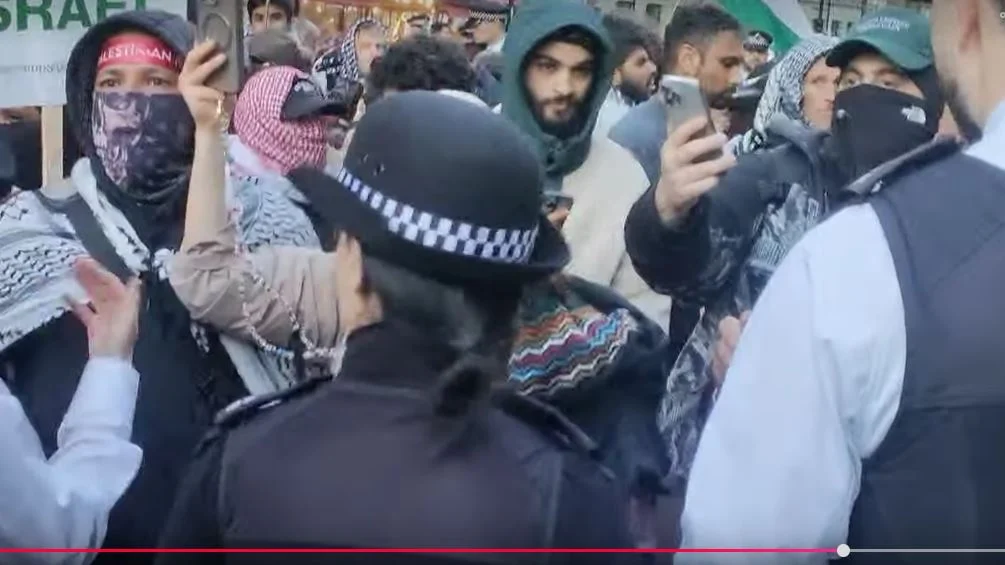

Chris Hobbs attends a running game of 'cat and mouse' betweeen Met officers and Pro-Palestinian protesters who were eventually kettled.
Once again, a Friday saw pro-Palestine activists take to the streets and cause problems for the Met officers abstracted from their normal duties in order to police those events. The previous Friday (10th of April), two police liaison officers prevented disorder by placing themselves between rival pro-Palestine and pro-Israeli groups; later the same day, the same pro-Palestine protesters swarmed a group of senior military officers as they entered the Ministry of Defence.
Last Friday the protest, in Whitehall opposite Downing Street was in support of an international ‘Palestine Prisoners Day.’ The numbers attending were down on previous weekday protests at the same venue and once again there were a series of impassioned speeches; one speaker criticised the Met for ‘favouring’ Tommy Robinson in allowing him his preferred route for the Unite the Kingdon march on May 16 which is also the date for a major pro-Palestine ‘Nakba’ protest.
Unite the Kingdon and Nakba Day
‘Nakba day’ (the commemoration of the displacement of 750,000 Palestinians from their lands in 1948) sees pro-Palestinians take to the streets the world over; alas for UK pro-Palestinians Tommy Robinsons announcements for his event can be found on social media as far back as mid-December. The speaker, however, urged the audience to be amongst those who will, he stated, take to the streets in their many thousands and block the Unite the Kingdom event. The Nakba march and rally could still take place albeit with a different route and rally location, but the focus appears to be shifting to blocking the Unite the Kingdom march which will again require an expensive policing operation including ‘aid’ from other forces.
Rally followed by an illicit march
On this occasion, as the modestly attended rally finished, police and observers were surprised to find over a hundred mainly youthful activists, emerge from behind the stage and take to the road. Normally these protests end with participants using the footways to leave in an orderly manner.
This was clearly a pre-arranged illicit march along Whitehall towards Trafalgar Square thus blocking traffic headed in the same direction. As they marched more protesters who had been at the rally joined them.
Several officers ran to keep up with the march whilst those in carriers looked on awaiting instructions whilst the general feeling amongst observers was that the march would be short-lived and end in Trafalgar Square.
However, the marchers turned left at the top of Whitehall and walked along Cockspur Street before turning right onto the Haymarket. Several officers had now caught up with the head of the march informing them as best they could that Section 12 of the Public Order Act had been invoked. The marchers took no notice but as they marched up the Haymarket, they could see police carriers being placed at the top of this world-famous street. The leaders at the head of the march suddenly turned right down a side-street towards Leicester Square and what had become a ‘cat and mouse’ game continued.
Another police attempt to corral the chanting crowd, whose actions were now causing concern amongst tourists and those out for the night, failed when the leaders again diverted.
‘Kettled’ in Irving Street
Eventually those leaders made an error when they led protesters into Irving Street after skirting Leicester Square. Police carriers and officers quickly formed a cordon at one end; the marchers turned back but another police cordon was quickly formed and most of the protesters were effectively ‘kettled.’
Irving Street contains a number of restaurants with outside tables and diners and passing tourists looked on in surprise at that which was occurring. One arrest saw an individual pinned to the ground by officers to the outrage of the activists.
After a while, due to bewildered members of the public also being caught in the ‘kettle’ the cordon was relaxed and activists allowed to depart in small groups; whilst police were now in control there were insufficient to consider wholesale arrests and indeed there appear to have been no conditions set for this protest in that none were published. This was also the case last Friday.
Protests elsewhere
Meanwhile, officers elsewhere were also having to deal with protests. In Manchester a march by Britain First was inevitably met by counter-protesters. Footage shows Greater Manchester Police officers had to work hard to keep the rival factions apart occasionally having to use batons.
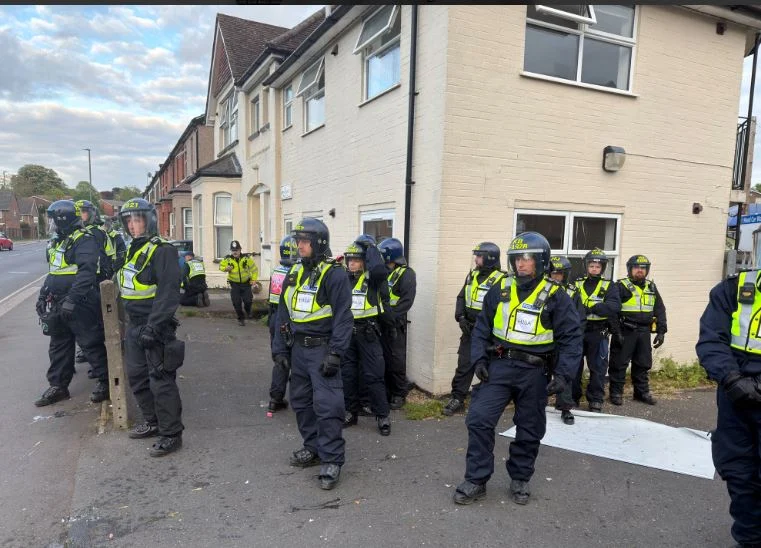
In Epsom, an allegation of rape has seen two protests; Saturday saw the first which took place on the grounds that no description of the alleged offenders was placed in the public domain by police. The second, on Monday evening, was staged on the basis that the suggestion by Surrey police, that they could find no evidence of a rape, was a ‘cover up.’ The second protest saw two bricks, several cans and eggs thrown ay officers. On both occasions, doubtless remembering events at Southport and Epping, officers were ‘kitted’ with long shields deployed. At least one individual was detained
Doubtless more protests will follow but increased attention will focus on May the 16th when, as stated above, a large Unite the Kingdom march and rally will be opposed by a significant anti-racist counter protest.
The one puzzling question is why the UTK event is being held on Cup Final day!!
Chris Hobbs is a former Special Branch officer who follows protests as an observer for Police Oracle.
Category: Public Order