Article
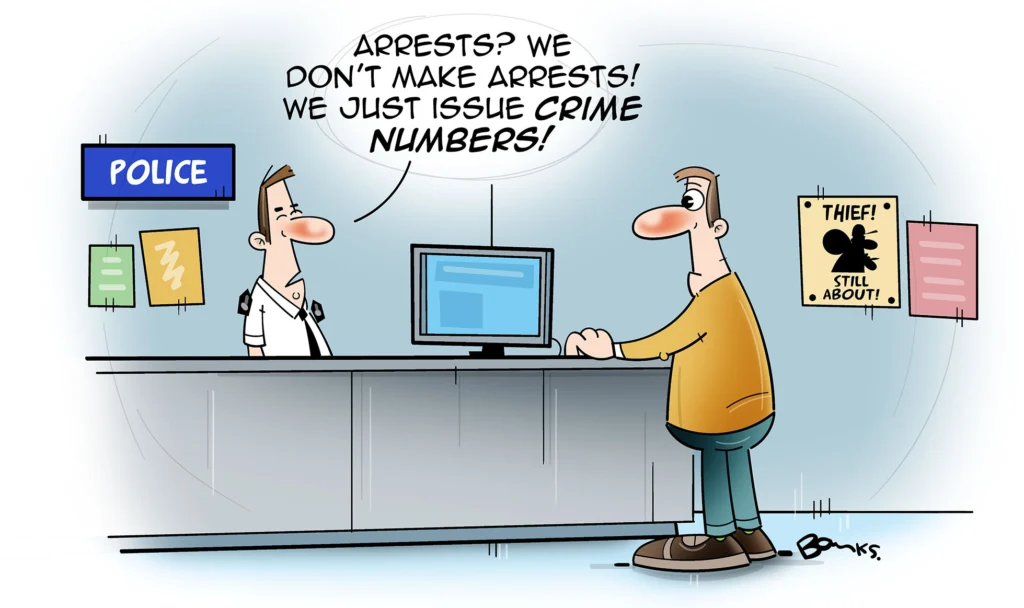
Eyewitness: as national and international tensions grow, are we seeing the first signs of protest fatigue?
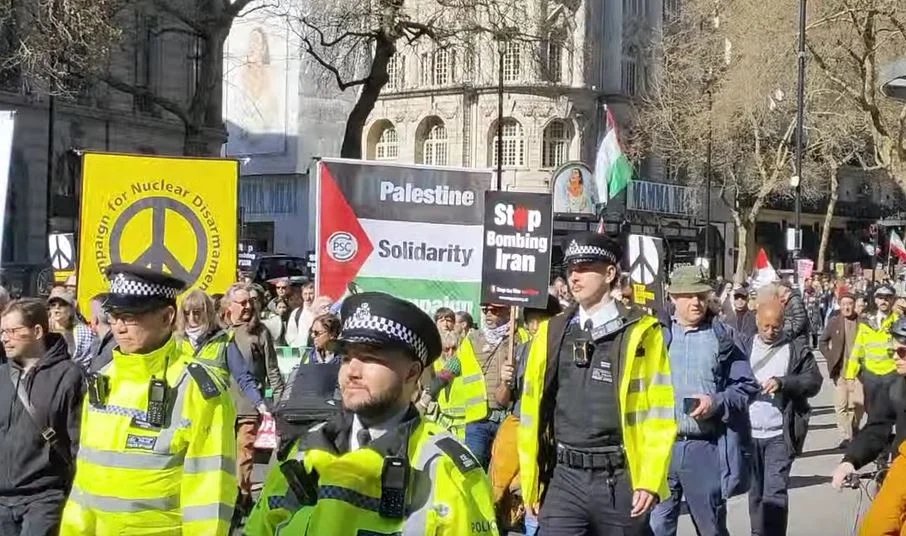

Chris Hobbs asks the question after attending the latest round of central London protests.
During what was an emotive weekend for the police service, the daily complex, unremitting and indeed dangerous nature of police work continued.
This includes policing the apparently never- ending succession of protests and the Met were duly faced with an all too familiar protest scenario over the two days.
On Saturday, the Palestine Solidarity Campaign staged such another protest with issues around Iran and Lebanon now joining Palestine as areas of concern for those participating.
The route was a familiar one; from Russell Square, down to Aldwych and the Strand, on to Trafalgar Square with a rally in Whitehall. Given the dramatic events in the Middle East which have dominated worldwide news bulletins, I was surprised to be told upon arrival that numbers were well down on those of previous weeks.
Another noticeable difference was the fact that there was no counter-protest being staged along the route by pro-Israeli groups who now have allied with Iranian monarchist organisations.
Officers alert for potential disruption
The Met however, were taking no chances in terms of ad-hoc protests or the appearance of ‘Inserts:’ pro-Israelis who deliberately place themselves in the midst of those with opposing views hoping to provoke a reaction.
Officers kept ahead of the protest looking for potential disruption but there was none. The general view was that the preference of those who would normally counter-protest had opted to join a march to the Iranian Embassy in order to demonstrate against the regime.
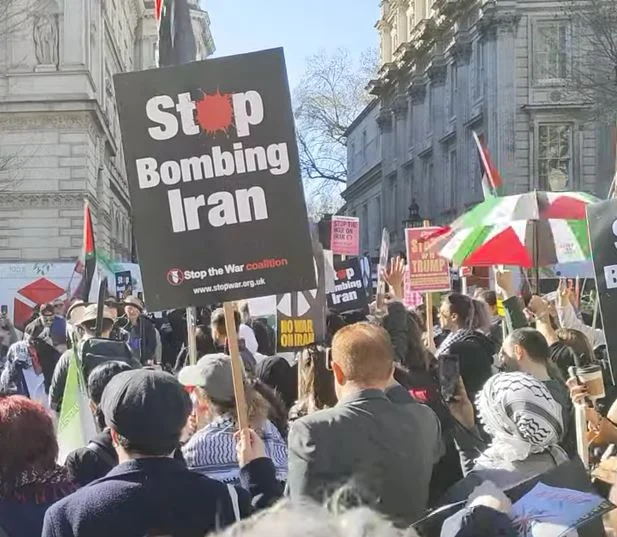
The march reached Whitehall without incident and, as marchers walked towards the stage which was located by Downing Street, it became clear that numbers were in fact noticeably down compared to previous PSC events; the phrase ‘protest fatigue’ was heard as indeed it had been heard the previous Sunday, when numbers of those who attended the controversial Al Quds static protest were far fewer than expected.
The speeches began and once again we had this strange scenario of a more youthful group complete with drums, ignoring proceedings on the stage and indulging in their own ‘chant fest’ which made it impossible for those further back in the crowd, to hear those speeches being made.
A third group were also visible and held their own small meeting; these were supporters of the current Iranian regime and carried their distinctive national flags.
Whitehall arrest
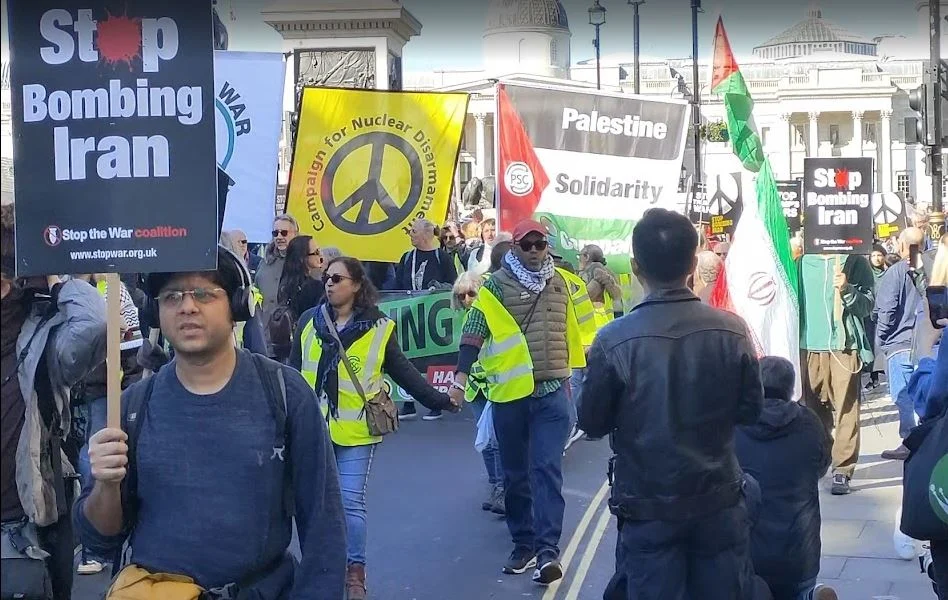
At the end of Diane Abbott’s speech, I walked down Whitehall to Keith Palmer’s memorial outside Parliament. On my return I was informed that I had missed an incident which had resulted in one arrest.
It would appear that this involved an individual, well known to police and leftist protesters for his pro-Israeli views and for ‘inserting’ himself in the midst of Palestine marches hoping to provoke a response. This tactic commenced in October 2023 and has resulted in him being arrested on numerous occasions for breaching the peace or ignoring protest conditions. He boasts of a lack of convictions, accuses the Met of brutality and has compared them with the Iranian IRGC, who of course, recently massacred thousands.
This individual is also a leading voice in the Iranian monarchist movement and indeed, despite him inviting assaults from rival protesters, he is normally just met with abuse and insults.
On this occasion he was apparently seen by the above-mentioned group of Iranian regime supporters and assaulted. The police were quickly on the scene and arrested the assailant.
After hearing details of this incident, it then became obvious that whilst the rally was continuing, the crowd had become sparse.
During the same afternoon, an Iranian monarchist march, both to protest against the regime and celebrate the Persian New Year, took place from Marble Arch to the Iranian Embassy with no reports of any incidents.
Issues in Birmingham and on Merseyside
On Sunday, I’m afraid that the lure of three televised football matches in succession proved too great but there are no reported incidents in relation to the two separate anti-Iranian government protests that took place in London during the day.
Whilst the events of the weekend in London may have been virtually trouble free, the complexities of the current situation linked to Iran are obviously a policing challenge for the Met and other forces.
Alarming footage has emerged of a fight in Birmingham City Centre following an Iran linked protest. One youth, holding what appeared to be a knife was filmed being chased by others. West Midlands police stated that four youths were arrested and a zombie knife recovered.
Elsewhere in the country, Merseyside Police had to deal with a ‘Christian nationalist’ type event organised by UKIP in Liverpool. This attracted a sizeable counter-protest resulting in scuffles and six arrests. It also appears that there was a falling out amongst those on the right of the UK’s political spectrum.
This Saturday in London see’s various leftist organisations including pro-Palestinian groups, joining together for a major anti-racist protest which will involve a march from Hyde Park to Whitehall where there will be a rally.
There are no reports thus far, of any counter-protests but once again, given current tensions across the board, numerous Met officers will again be abstracted from local duties or will have already had their rest days cancelled.
Chris Hobbs is a former Special Branch officer who follows protests as an observer for Police Oracle.
Category: Public Order
Advertisement
Job of the week
DEPUTY COMMISSIONER OF POLICE
- Royal Cayman Islands Police Service
- Cayman Islands
- CI $121,356.00 – $155,316.00 per annum
The Deputy Commissioner of Police provides strategic leadership in support of the Commissioner of Police to ensure the effective management, direction, and oversight of the Royal Cayman Islands Police Service (RCIPS). The role is critical to advancing national security, enhancing public safety, and sustaining public trust across the Cayman Islands. The post holder is responsible for leading the development and execution of policing strategies, overseeing operational and organisational performance, and ensuring compliance with legal, ethical, and professional standards. The Deputy Commissioner also serves as the principal liaison with government entities, community stakeholders, and international partners, and assumes full command responsibilities in the absence of the Commissioner.
Read moreCoffee break