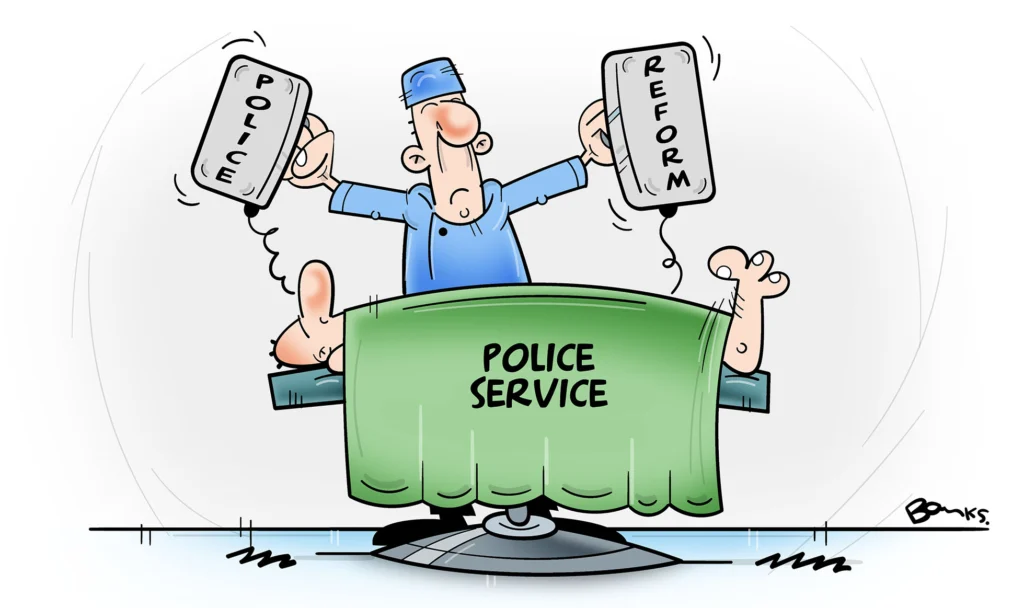
Article
Viewpoint: the aftermath of tragedy
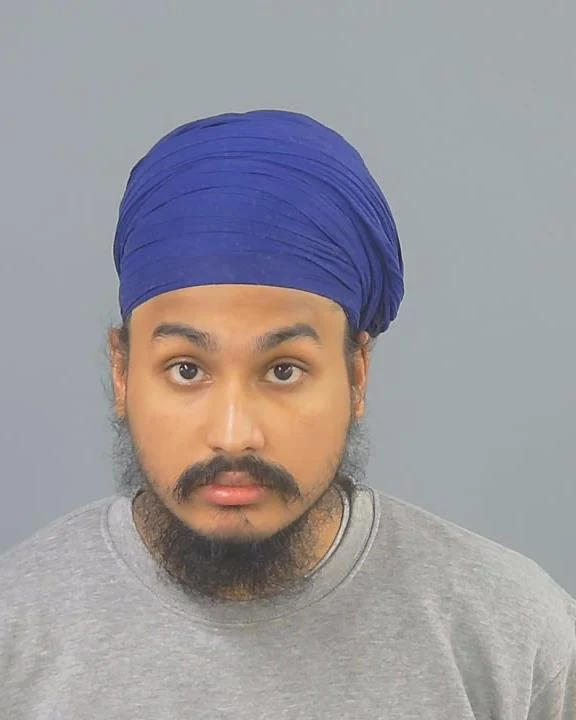

Following the conviction of Vickrum Digwa for the murder of university student Henry Nowak, Chris Hobbs relfects on the criticism of officers who attended the fatal incident.
The death of Stephen Lawrence is considered by many to be a watershed moment in the history of the British police service with the term ‘institutionally racist’ a millstone that would hang around the necks of the police service for many years. It remains to be seen whether the tragic murder of Henry Nowak and the subsequent fall-out has the same effect.
This is a revised version of an article which appeared yesterday. Since then, the sentencing remarks of the trial judge have been published, bodycam footage has been placed in the public domain and police generally are being vilified with much talk of revenge as attempts are being made to identify the officers involved. The safety of those officers must now be of paramount concern to Hampshire police.
Much criticism comes from those who have never had to arrive on the scene of a significant incident and, amidst the chaos, ascertain what has occurred, what action needs to be taken and whether there is a significant threat to the public and/or themselves. Critics will respond by saying that this is what officers are trained to cope with.
The surprising release of police bodycam footage shows that the waters were clearly muddied by the brother of the assailant who according to reports, dialled 999 claiming that there was an ongoing racial incident in which they were the victims. Since the guilty verdict there has been much speculation and misinformation as to what had occurred. The sentencing comments of the trial Judge William Mousley have painted a much clearer picture of that which occurred on that fateful night, although a number of questions remain unanswered despite the release of bodycam footage.
Not survivable
Judge Mousley’s comments in respect of the behaviour of Digwa, during the course of the evening are damning and illustrated that the judge had clearly researched the elements of Sikhism and the carrying of the Kirpan. One aspect of the confrontation between Henry and Digwa that came out of the blue was the fact that the latter had snatched Henry’s phone during the confrontation. It was later recovered from Digwa by police.
The description by the Judge of the devastating stab wound was followed by his repeating the evidence of the pathologist, namely that the injury was not survivable in any circumstances.
The duplicity and lies of Digwa and his brother Gurpreet during their interaction with police brought scathing comment from the Judge while his description of a mortally wounded Henry attempting to get away from his tormentor was heartbreaking.
As stated above, significant efforts were made by the brothers to portray the incident as racist which involved allegations of the use of the term ‘Paki’ and an assault which caused an alleged eye injury.
Flawed initial response
Much criticism is being directed against the three officers who initially responded to the call for not immediately realising that Henry had been stabbed. Reports state that upon their arrival at the scene, the same allegations in respect of racism were made to officers by the brothers. These were shown on the bodycam footage.
The situation must have been even more confusing if, as reported by GB News and others, officers found Henry leaning against a house wall in Belmont Road, supported by the defendant’s (Digwa’s) father who, according to the Judge, was trying to assist him.
Cartoons and comments suggest that either police should have noticed the chest wound that ultimately killed Henry or that they did observe it and did nothing. The Judge made it clear that given the nature of the wound and the clothes worn by Henry detecting the injury would have been difficult.
“The police were given a convincing but wholly false narrative of the incident. It was dark and Henry was wearing a dark top. The entry damage caused by the knife through it, would not have been obvious. Whilst there was visible blood on Henry, it would not have clearly been seen coming from that wound and the clearly visible facial wound was not life-threatening. Henry was complaining that he had been stabbed and was struggling to breathe but that would not have necessarily told the officers how serious the situation had become.”
The Judge went on to say;
“These police officers were faced with having to make quick decisions in pressurised circumstances about the best way to act. The genuine shock to the particular police officer, when he realised that he had been giving CPR to Henry when he had a serious chest wound tends to show that he was doing his best in a very difficult situation.”
Of course, it could be said that the Judge is part of an establishment cover up or, on the contrary, would have taken the opportunity to criticise police if he felt it necessary. Judges are at liberty to criticise police even where there has been a successful outcome at court but there was no criticism on this occasion.
The decision by the male officer may, and this is speculation, have been influenced by the cut on Henry’s face which the officer may have assumed was the stab wound being referred to. The handcuffs were on for a minute before officers took action as Henry collapsed. Nevertheless, poor Henry was clearly struggling and although that could have been for a variety of reasons, the footage shows that many questions need to be answered.
The Judge did refer to police recording a damning conversation between the two brothers carried out in Punjabi as they were being transported together which clearly was of significant value to the prosecution and was likely to have a been a key factor in Digwa’s conviction.
Sinister requests could endanger officers
The conclusion of the trial, the guilty verdict and the bodycam footage resulted in a tidal wave of criticism of police in respect of ‘two-tier’ policing and ‘anti-white racism.’ As with previous incidents, collective smearing of all police officers was rampant across social media. Disturbingly two well- known individuals who are, to say the least, very much on the right of the political spectrum, asked that anyone in possession of details of the reported three officers involved should forward them; this presumably for public exposure or some form of harassment or for more sinister actions. Whilst names may not, in themselves be an issue, photographs, car registrations and home addresses would be.
Names of officers were subsequently forwarded via ‘X’ to those individuals who made the request but these were details already in the public domain by virtue of appearing on the Hampshire Police website due to the fact that they were neighbourhood police officers. This meant that they were unlikely to be those who responded to the 999 call at 11PM; those officers were almost certainly from Hampshire police response teams.
A further cartoon has now appeared on ‘X’ offering a ‘bounty’ of £5,000 for details of the officers. The cartoon shows three female officers, one in a hijab, giggling at the sight of a male collapsed against a wall bleeding profusely from the stomach.
This has been followed by details and a photo of a male officer being posted on ‘X’ as the male officer involved in handcuffing Henry. This has been followed by a high number of threats and another photo of a named female officer. At the time of writing there has appeared comment from the Hampshire Police Federation that these are NOT the officers involved but there has been no further comment thus far. It would seem however that whether these officers were involved or not, there is now a ‘target on their backs.’
The above- mentioned requests for names was an uncomfortable reminder of the controversial naming of the officer known as NX121 who was responsible to the fatal shooting of gang member Chris Kaba. There were and possibly still are, concerns for the safety of the officer in respect of his being a potential revenge target for others involved in London’s gangland.
Two-tier, woke and anti-white
It is those very same individuals on the political right who are now, in the aftermath of Henry’s death, criticising police in respect of being woke/DEI/ anti-white racists and ‘two tier.’ These allegations have been consistently directed against police over recent years including by leading Conservative politicians. These have caused particular resentment in policing circles due the fact that it was the Conservatives, when in government, who imposed swingeing cuts upon the UK’s police service from which it has never recovered.
As stated above, whilst those on the political right frequently refer to ‘two-tier policing,’ it should be noted that two-tier policing allegations together with those of police brutality emanate from other individuals and organisations including those on the left. Black activist groups, Islamic and Muslim organisations, pro-Palestinian activists, environmentalists, football fans together with Jewish organisations and Iranian dissident groups have all been critical of so called ‘two-tier policing.’ Criticism from the far-right is perhaps more concerning with a number of posts threatening a day of reckoning together with AI created images of UK police as Nazis or as servants to Islamists. There have also been general threats directed against officer’s families.
Collective smearing
Another consequence of this tragedy concerns the Sikh community who have always been regarded with relative equanimity across the political spectrum including by those on the right who make no secret of their contempt for Muslims. This is part of a statement issued by the Sikh Federation; ‘The entire Sikh community has been “demonised” as one individual has broken the law and been found guilty of murder. The murder weapon was NOT a Kirpan (one of the 5 Ks).
An alternative term to ‘demonised’ which is also applicable to police is ‘collective smearing’ and it is to be hoped that common sense will prevail aided by the conviction and 21 year sentence for the killer which I’m sure would be welcomed by the Sikh community.
The realities of modern policing
Whilst the death of Henry and indeed the circumstances surrounding the tragedy will have devasted the officers involved, police critics on all sides conveniently forget that police, when attending traumatic events, do act with both bravery and compassion. Officers will all too often attend a stabbing or shooting not knowing what they will encounter, namely whether they will have to deal with a life-ending threat to themselves and others or have to administer life-saving first aid or all three.
Ignored by police critics are the number of lives saved by officers who arrive at the scenes of carnage before paramedics and render life-saving first aid. These scenes of carnage will include stabbings, shootings and road-traffic accidents. Officers will also save lives when they are called to those suffering a mental health crisis and have decided that life is no longer worth living. This will, not infrequently, involve a dangerous intervention.
Many of these interventions will remain with officers for life due to the trauma they’ve experienced which may involve seeing the individual die despite their best efforts. On other occasions all officers can do is offer comfort to those for whom no more can be done. Occasionally errors will be made which will be bitterly regretted.
Lives will also be saved by police stop and search and the seizure of weapons. Those who campaign against stop and search should perhaps remember that most victims of gun and knife crime would still be alive had police conducted a stop and search on their killer before that individual encountered the unfortunate victim. This of course applies to Vickrum Digwa.
Sadly, however, the murder of Henry and the subsequent fall-out, which will involve the collective smearing’ of all officers, will only serve to feed the current collapse of police morale throughout the country which is leading to an exodus of officers who have simply had enough.
It remains to be seen whether action is taken by the IOPC in respect the officer or officers who responded on that night. This tragedy may mean changes in police emergency first aid training which underwent a revolution following the death of Stepehen Lawrence many years ago. A significant factor here is the fact that the officer didn’t implement established first aid protocols when Henry stated he’d been stabbed. As we know these would not have saved Henry but at least his family would have known that everything which could and should be done was being done. The officer did however, as commented by the Judge, do his best for Henry after he collapsed.
One option may be that any suggestion of a stabbing will result in clothes being cut away in order that a full examination be carried out. Even if one stab or slash wound is visible and is that is the wound being complained about, consideration may now be given to conducting a full examination bearing in mind that some life- threatening knife wounds result in very little blood being shed.
Lessons will be learnt from this tragic incident and in years to come, it may be just a small consolation to the family and friends of Henry that any such lessons will save lives as the bloodletting on our streets continues.
Chris Hobbs is a former Special Branch officer.
A very well written article, balanced and fair and exploring the issues with the correct tone and compassion.
The shame is the MSM etc are off on another anti police crusade and nothing that the more reasoned responses to this tragic event will alter their narrative. Yes officers made mistakes but they were preloaded with the original report claiming that the Sikh brothers had been assaulted by Nowark then at the scene the officers were again faced with the racist assault allegation and without the obvious sign of Nowark bleeding proceeded on the that basis.
No surprise that the the Judges comments putting the officers actions into context and understandable confusion were totally ignored.
Politicians and the media demonising the thousands of hard working police officers. I wonder how they would have reached to dealing with a confusing and volatile incident .
Yet another effort to undermine the police service.
Thanks for this much needed article.
Advertisement
Job of the week
Police Sergeant – Ascension Island

- Ascension Island Government
- Ascension Island
- £23,968.00 per annum plus food and utilities allowances, free housing and other benefits
This is a unique opportunity to take on a key operational role within the Royal St Helena Police Service on Ascension Island. Working closely with and supporting the Police Inspector, you’ll help provide effective day-to-day supervision, maintain high professional standards and ensure the team delivers a responsive and community-focused policing service. You’ll be a visible and approachable presence for both colleagues and the wider community, offering guidance, making sound operational decisions and helping officers develop their skills and confidence. This is a varied, hands-on role for an experienced Sergeant who enjoys supporting leadership, strengthening a team and making a genuine difference within a close-knit island community.
Read moreCoffee break