Article
Viewpoint: Policing rewards the officer who never stops. That’s the problem


Ahead of World Mental Health Day this Saturday, serving Police Scotland officer Alanna Goddard on why behaviours policing associates with resilience can mask poor health and practical ways officers can better manage recovery around demanding shifts.
I have served as a police officer for fourteen years. In that time, the conversation about officer wellbeing has improved considerably. Trauma is discussed much more openly than it once was, and employee assistance and peer support were far less known and visible when I joined at 19.
What receives far less attention is everything that happens after the shift ends.
The 2026 National Police Workforce and Wellbeing Survey, the largest exercise of its kind ever undertaken in policing, gathered more than 55,000 responses from officers and staff across England and Wales. It found that 56% regularly feel physically exhausted and 45% regularly feel burnt out. Nearly two thirds regularly work beyond their contracted hours, a figure that rises to 72% among officers. The consultancy that conducted the survey observed that frontline policing reports higher levels of burnout than any other sector for which it holds data.
Behind those statistics are officers who may have been pushing through warning signs for months or years.
Poor health does not always look like poor health
For a long period of time, I appeared to be the model of a healthy officer. At the time, my week revolved around training and food. I trained seven days a week and fitted exercise around whatever shifts I was working. After a nine-hour shift I would still go straight out for a run, sometimes followed by swimming or weights. Before a backshift, I would run first. Even on rest days, I felt I had to do something.
Food had become just as rigid. If colleagues were having morning rolls or someone brought cakes into the office, I would not allow myself to have one because it did not fit with what I had planned. Colleagues would tell me how healthy I was, but many of the behaviours they were praising were the same ones making me unwell.
I was later diagnosed with anorexia and orthorexia, and spent two years in outpatient treatment. What I had believed to be the pursuit of health had in fact made me unwell.
The point I would ask colleagues to take is not the diagnosis. It is that ill health in policing does not always present as ill health. Sometimes it presents as the officer who never takes a rest day, never uses their leave and is permanently available. In policing, those behaviours can easily be mistaken for resilience and commitment.
Support that begins before the crisis
Police Scotland has invested seriously in welfare, and provisions such as Your Wellbeing Matters where round-the-clock employee assistance is genuinely available. That support matters and it was the step the service needed to take, but formal support is only one part of the picture. We also need to talk about the ordinary, preventative work of staying well across a long policing career.
That business takes place in the hours nobody counts. It is the sleep that never recovered after a run of night shifts. It is eating whatever remains at three in the morning because there was no realistic opportunity for a break. It is the rest day cancelled at short notice, and the absence of anything that teaches an officer how to decompress before walking through their own front door.
None of it is dramatic enough to prompt a referral. All of it accumulates. Notably, when the national survey asked what the workforce most wanted, the clearest answer was more time to recover.
What actually helps
Through my training at the Health Coaches Academy, which I initially signed up for to better understand my own recovery and some of the pressures I could see affecting colleagues around me, I realised that improving your health does not have to mean overhauling your life or stepping away from policing. Often, it is about making smaller changes that work around the life and shifts you already have.
After a hard shift now, I am much better at checking in with what I actually need. Sometimes that is a walk, time with my partner, seeing family or simply reading with a cup of tea. If I am tired, I can rest without feeling guilty that I should be exercising.
That is very different from how I used to operate. Exercise is still important to me, but it no longer dictates my day. I can recognise when movement will help and when what I actually need is recovery.
Most people already know many of the things that could support their health. The harder part is making those changes feel realistic, particularly around demanding shifts and unpredictable routines.
Two things come up more than anything else. The first is having something that marks the end of a shift. Not an hour of anything, just a deliberate ten minutes between the job and the front door, whether that is the drive home with the radio off, or a walk around the block before you go in. Without it, the shift can come home with you.
The second is what I would call all or nothing thinking. After a run of nights, people either commit to an overhaul they cannot sustain, or write the week off entirely. The question worth asking instead is what the smallest version looks like, the thing you would still do on your worst day, because that is the one that will survive a difficult month.
This is why recovery should be treated as part of the job rather than a reward for completing it. Rest days and annual leave should be protected with the same seriousness afforded to an operational commitment. Supervisors should be trained to notice the officer who never takes time off, and not only the one who is visibly struggling. Preventative support should be made visible early in a career, rather than discovered at the point an officer is already signed off.
For those in rural and remote policing, that can matter even more. Where officers are single-crewed and a considerable distance from their nearest colleague, the informal decompression of a busy city office does not exist.
Still serving
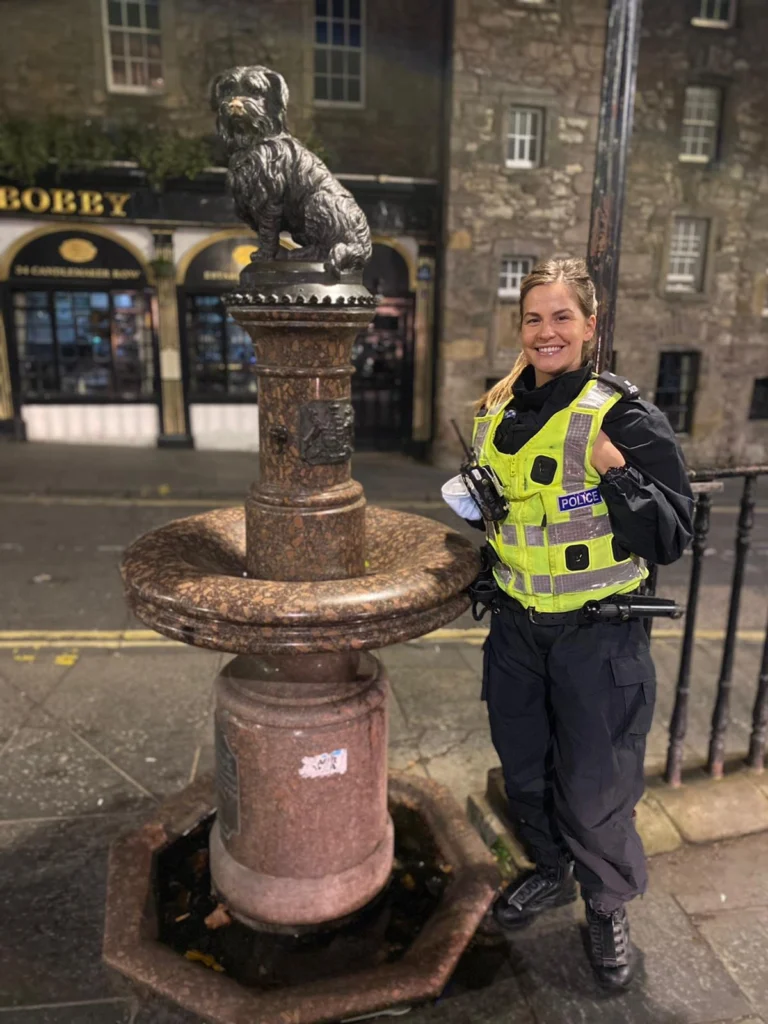
Fourteen years in, I am still in post and committed to the job. What has changed is that policing cannot be the only thing that gets a claim on someone’s time, energy and identity. Having meaningful work and interests outside the role can be part of what helps people sustain long careers within it.
Recovery is possible and built from very ordinary things, like enough rest, space to decompress, realistic expectations and permission to step back before reaching breaking point.
Health is not a matter of controlling yourself more. It is a matter of trusting yourself more and recognising what you need to stay well. For policing, that means treating recovery as part of performance rather than something officers have to earn once the work is done. The people who give so much to the job need support long before they reach the point of a sick note.
Alanna has served for 14 years, is still working in the Highlands, and alongside policing has qualified as a Health Coach and founded AG Health. She is also an ambassador for Beat, the UK’s eating disorder charity, using her lived experience of anorexia and orthorexia to support families and carers.
Category: Wellbeing
Can relate.
Much good sense spoken here. If only the purported ‘leaders’ and their well paid advisors and consultants simply listened to those who have to live it. Alanna would be a good place to start.
Advertisement
Job of the week
Police Sergeant – Ascension Island

- Ascension Island Government
- Ascension Island
- £23,968.00 per annum plus food and utilities allowances, free housing and other benefits
This is a unique opportunity to take on a key operational role within the Royal St Helena Police Service on Ascension Island. Working closely with and supporting the Police Inspector, you’ll help provide effective day-to-day supervision, maintain high professional standards and ensure the team delivers a responsive and community-focused policing service. You’ll be a visible and approachable presence for both colleagues and the wider community, offering guidance, making sound operational decisions and helping officers develop their skills and confidence. This is a varied, hands-on role for an experienced Sergeant who enjoys supporting leadership, strengthening a team and making a genuine difference within a close-knit island community.
Read moreCoffee break