Article
Viewpoint: did the Portsmouth and Dover protests amount to a failure of intelligence?
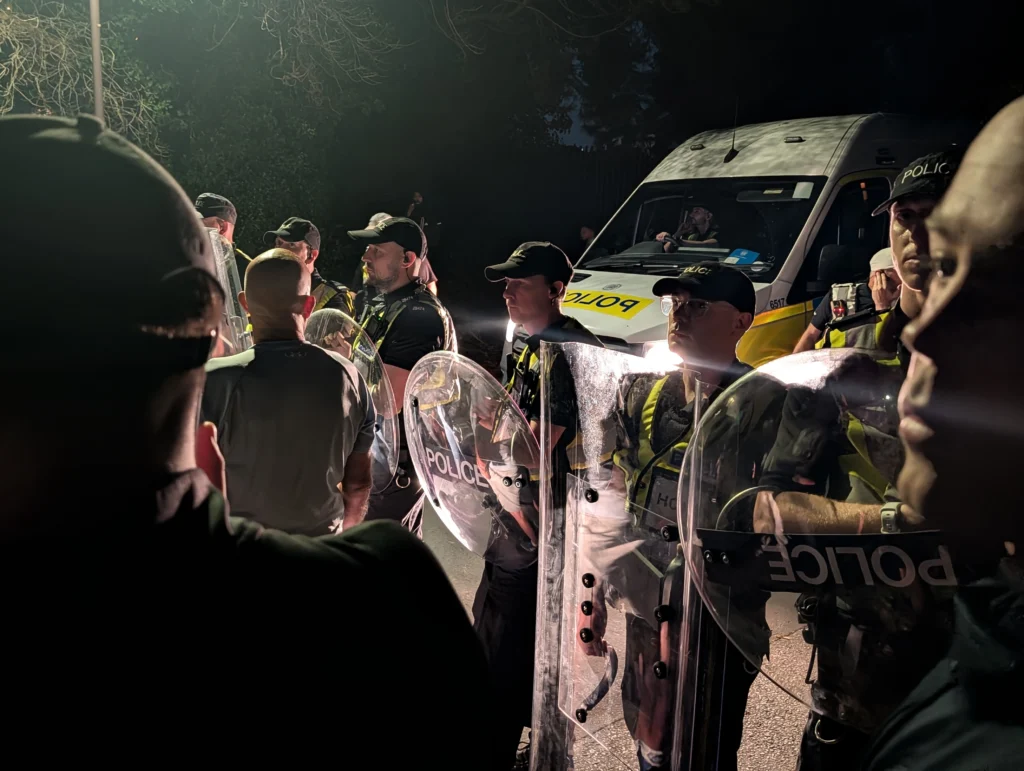

Chris Hobbs questions whether the two protests against migrants in Dover and Portsmouth this weekend 'caught policing on the hop'.
Officers reporting for duty last Saturday at Dover would have been hoping for a fairly leisurely start to their early morning shift. Perhaps a cup of tea whilst examining briefing notes, emails and the inevitable correspondence that would have ended up cluttering their ‘in-trays.’
They, and indeed their colleagues across Kent, would not have been expecting a major public order situation to be developing which would soon dominate headlines across the UK. As the situation became clearer senior officers at the Kent control room would also be making decisions as to how many officers could be spared from routine local response duties and sent to Dover.
Supervising officers at each operational police station would have been involved in decision making as to exactly who would be deployed to assist colleagues and who would be remaining to deal with calls from the public. Doubtless, ‘preference’ would given to those officers who were at least Level 2 public order trained.
Men in black
Whilst this incursion, by around 400 masked men dressed in black, clearly took Kent police and policing in general by surprise, should it have done? On ‘X,’ footage has appeared which has shown significant gatherings of men being addressed by a known individual promising a forthcoming, spectacular event which would be linked to migration. That individual, well known to activists on both right and left, made no attempt to hide his identity.
The actual ‘operation’ was meticulously planned and, like leftist activist groups intent on causing unheralded disruption, must have required effective methods of communication which would stand little chance of being detected by the authorities. Reports suggest that there was significant traffic disruption in Dover which caused those with ferry bookings to miss their allotted sailing times. This, predictably, resulted in comparisons with the tactics of leftist groups such as Insulate Britain and the recently regenerated Just Stop Oil which were bitterly criticised at the time by those on the right for blocking roads and motorways.
The spectacle of large groups of men dressed in black and wearing masks on the streets of a UK town can only invoke images of masked paramilitary groups in Northern Ireland who, of course, are linked to extreme levels of violence including life-threatening attacks on police and the murder of political opponents.
Intelligence failings?
The intelligence failure in relation to this event will be a cause for concern for Chief Constables across the UK given the fact that the above-mentioned footage of males gathering for ‘briefings’ and the identity of the clearly obvious orchestrator of this event, Daniel Thomas aka Danny Tommo, were, as indicated above, ‘all over’ social media.
Advance intelligence in relation to this incident perhaps somehow ‘fell through the cracks’ between terrorism and public order and perhaps between the security services and police. In the Met, the very capable Public Order Branch of MO6 is, like specialist units across the force, being subjected to ‘tenure’ where officers, who are experts in their field, are being reluctantly moved back to borough policing. In my humble view, the fact that the Dover incident fell through the above-mentioned cracks should be the subject of an investigation by the current acting head of the police inspectorate, Michelle Skeer.
Had there been some form of pre-warning as to the date and time of this incident, doubtless Kent police would have ensured sufficient resources would be available including ‘aid’ serials from other forces. As it was Met TSG units were put on stand-by when the situation became known and would have made their way to Dover ‘on the hurry up’ had the situation deteriorated. Happily, it didn’t.
The question to be answered at this moment in time is ‘what now?’ There’s no doubt that numerous laws have been broken by the staging of this protest. Kent police have described the protest as ‘spontaneous’ which provides exemptions for organisers under current legislation. However, this incursion was anything but ‘spontaneous’ thus suggesting offences under the Public Order Act and other legislation, may have been committed.
Whether Kent Police and the Crown Prosecution Service decide to travel down that road remains to be seen but that leads us to the issue of potential future illicit protests which are organised in secrecy.
Just the beginning?
Ominously, a recent statement from the group states that ‘this is just the beginning’ and further protests are planned.
The nightmare scenario would be a similar clandestine protest such as we have just seen, being directed against a known migrant hotel (and of course attempts were made to set two ‘migrant hotels on fire during the 2024 riots) or where hundreds of masked activists materialise in an area that is heavily populated by ethnic minority groups such as Whitechapel or Southall in London; Sparkbrook and Bordesley Green in Birmingham, Rusholme in Manchester.
Organisers of the Dover event will rightly point out that their protest concerned persons arriving illegally in small boats and was peaceful: However, a change of emphasis say to a similar, clandestine, unannounced protest against illegal migration and grooming gangs could then, as alluded to above, result in several hundred masked white men dressed in black parading around an area with a significant ethnic minority population.
It goes without saying that such a protest could have disastrous consequences. A conflagration based on race, in one area of the country could spread with the speed of those wildfires that we have seen in such abundance of over the past few months. Of course, if this happened in a metropolitan area of the UK, additional police resources would be deployed more rapidly than was seen Dover. Having said that, additional potential targets are migrant ‘camps’ which tend to be located in less well populated areas.
Police chiefs now need to get their act together and ensure that, as far as is possible, there is no repeat of a Dover type incident where police resources are insufficient to deal with the situation. The government needs to ensure that the police are adequately resourced to deal with such protests and that cutbacks to public order units and assets together with officer training, cease. This is especially relevant to the Met who are suffering cutbacks across the board as well as weakening still further their potential response to a public order crisis by the imposition of tenure.
Social media, insurrection and officer safety
Many forces surrounding London and indeed beyond will be looking to the Met for support if serious communal disorder breaks out in their force area.
It was hoped that the incident at Dover was a one-off but whilst it passed off without incident, at the time of writing, another incident is ongoing in Portsmouth where local ‘patriots’ led by Danny Tommo, are blocking coaches containing migrants who have just been picked up having crossed from France.
Social media is awash with comments relating to the future which include suggestions that amount to violent insurrection and attacks on identified police officers and their families. It should be remembered that officers wrongly blamed for the death of Henry Nowak had to be relocated.
Chris Hobbs is a former Special Branch officer.
Category: Public Order
A slow, and worringly inevitable, dismantling of policing in the UK is a car crash that has been watched and warned about for nearly 30 years. Tinkering with well-established ‘branded’ departments, amalgamating units and diluting experience did not happen overnight. Change became addictive with every new HQ top corridor appointee seeking to add their name to the list. It did seem, strangely enough, that this started with a take-down of HQ CID, Specialist & CT units and those leading them who presented as the most likely to become the holders of high office. Was the rug pulled from under as a bid to divide and conquer? Maybe not a UK-wide conspiracy, but how many autonomous forces actually went that way, fomented from cosy chats at Senior Command Courses perhaps?
Difficult to claim an intelligence fail given the last minute random decision of the RNLI to take onbaord the dinghy occupants and choose the landing site at the last minute
Advertisement
Job of the week
Police Sergeant – Ascension Island
- Ascension Island Government
- Ascension Island
- £23,968.00 per annum plus food and utilities allowances, free housing and other benefits
This is a unique opportunity to take on a key operational role within the Royal St Helena Police Service on Ascension Island. Working closely with and supporting the Police Inspector, you’ll help provide effective day-to-day supervision, maintain high professional standards and ensure the team delivers a responsive and community-focused policing service. You’ll be a visible and approachable presence for both colleagues and the wider community, offering guidance, making sound operational decisions and helping officers develop their skills and confidence. This is a varied, hands-on role for an experienced Sergeant who enjoys supporting leadership, strengthening a team and making a genuine difference within a close-knit island community.
Read moreCoffee break