Analysis
Notting Hill carnival: Is saving the festival a positive?

With Notting Hill carnival receiving nearly £1 million funding to support extra safety and infrastructure measures, Chris Hobbs asks if this is a positive move.
So, an extra £1 million has been found to ‘save’ the Notting Hill Carnival courtesy of City Hall and two London councils. Whilst music stages within the Carnival footprint will have their own professional security personnel, this one-million pounds worth of ‘extra’ security will doubtless simply see an increase in the number of hapless, bored or bewildered youths that can be seen standing or sitting around areas of the Carnival in ‘high viz’ jackets which label them as stewards. They would be woefully ill-equipped to deal with any crisis.
This will also mean that the Met, which is already making cuts due to a huge financial shortfall, will now have to find the £11 million to police a carnival which its officers know is a disaster waiting to happen.
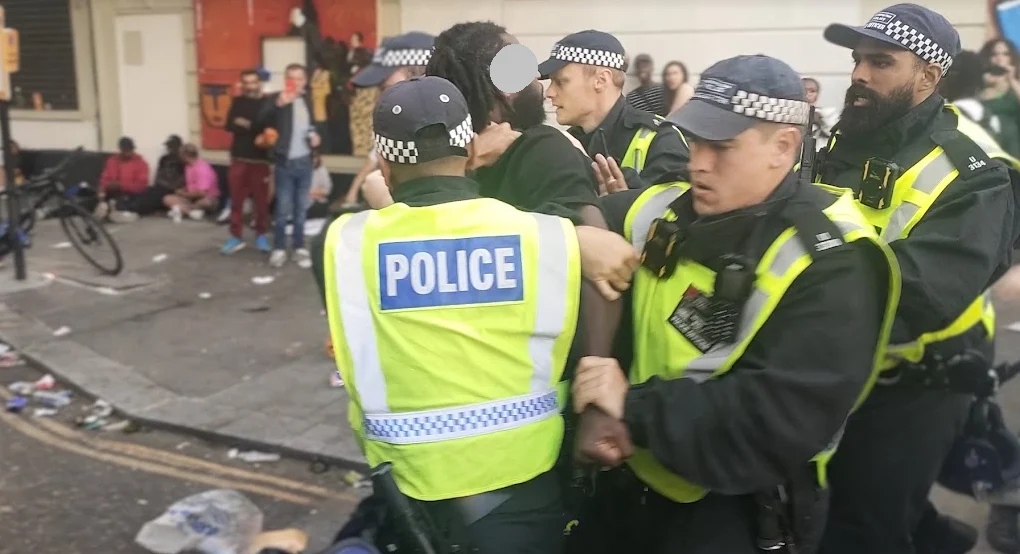
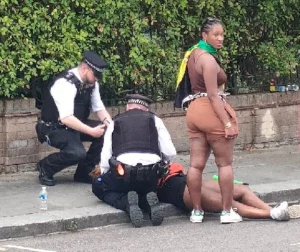
In 2022, that inevitable disaster was perilously close to occurring in Ladbroke Grove. Shocking footage emerged of a densely packed swirling crowd, which included helpless police officers who were pressing their emergency buttons, watched by horrified staff in the police operations room. On the same evening, amidst packed crowds, police fought desperately to save the life of a Bristol rapper who was fatally stabbed and left lying in a pool of blood.
Inherent dangers
In 2023, a lone paramedic and I found ourselves behind a large truck complete with a sound system, which attracted a densely packed crowd to the extent that the situation had moved from uncomfortable to dangerous. In fairness, the DJ stopped the music and began giving instructions to the crowd to ease the crush. At this point, a group of youths to my left began impatiently pushing their way through the crowd. I managed to extricate myself following suggestions I viewed in a YouTube video, and was assisted by a young carnival reveller.
I approached a group of officers who were watching the situation, and they explained that whilst GT (the operations room) was aware, intervention could make matters worse. Happily, there was no major incident, but My London later reported on two other potentially dangerous crushing incidents within the Carnival footprint.
In 2024, whilst I attended Carnival, I avoided anything that looked like a densely packed crowd like the proverbial plague.
In 2016, the media carried reports of two potentially crushing incidents, and in 2017, the throwing of a liquid resulted in panic amongst crowds, causing them to flee.
Fortunately, that area of the carnival was not densely packed.
Last year, there were two fatal stabbings, including that of a young mother, plus the ‘usual’ assaults on officers, non-fatal stabbings, arrests and numerous crimes, many of which will not be reported to police, as carnival goers know it would be pointless.
Crushing incidents such as at Hillsborough and more recently at Astroworld in Houston, the Hajj in Mecca and in South Korea’s capital Seoul, appear lost on the organisers, the Mayor, City Hall and local councils.
The positives
Yet, it would be churlish not to admit that there is much that is good about Carnival.
The ‘vibe’, despite the crime, is generally positive; goodwill, good humour and consideration abound and, doubtless to the chagrin of those who loathe police, relations between Met officers and the overwhelming majority of revellers are excellent. Officers can be seen across Carnival, tending those who have become unwell or injured, yet all police officers are only too well aware of the horror that awaits in the event of a mass casualty event that appears to be inching ever closer.
The question is, would the undoubted attributes of Carnival be lost by relocating the event to a more open venue? What surely is beyond doubt is that relocation would ensure a safer event.
And finally
If the ‘on the streets’ location remains the same, the second question is when, be it this year or sometime in the future, will that mass casualty event occur? When it does, the organisers, the Mayor, City Hall, local councils and activist groups will have a ready-made fall-back position. They will blame the police.
So one million quid suddenly appears from councils that are always bleating that they have no money. Eleven million quid will be spent by the Met to police this disaster in waiting carnival of mayhem and chaos.
Because when the mass casualty event does occur. The blame will be heaped onto the police from the very same people who have been warned countless times about this but chose to play the diversity at all costs card.
How many dead will it actually take before this carnival is cancelled? a dozen, fifty a hundred?
In the event of the inevitable avoidable disaster at least we, or rather the lawyers and DEI brigade will have the consolation of the the gift of a Public Inquiry which will after many months, or years deliver its report stating what is already blindingly obvious – viz its dangerous, reckless and ought never have been allowed but ‘lessons have be learnt’ (albeit way too late). However it will then be allowed to continue.
Police are in a no win situation. Countless examples of police saving the day at each yearly carnival, yet it is never acknowledged by the media, or activist groups who would throw a tantrum if the carnival was stopped, and blame the police.
Saving it is a positive – a postive disgrace and a testament to the gutless, spineless individuals in Goverment, both local and national as well as so-called police leaders. In the meantime the hapless local community and frontline police cannon fodder will take what thrown at them – literally!
No, next question.