Article
Eyewitness: October 7 – controversy in abundance but no violent disorder
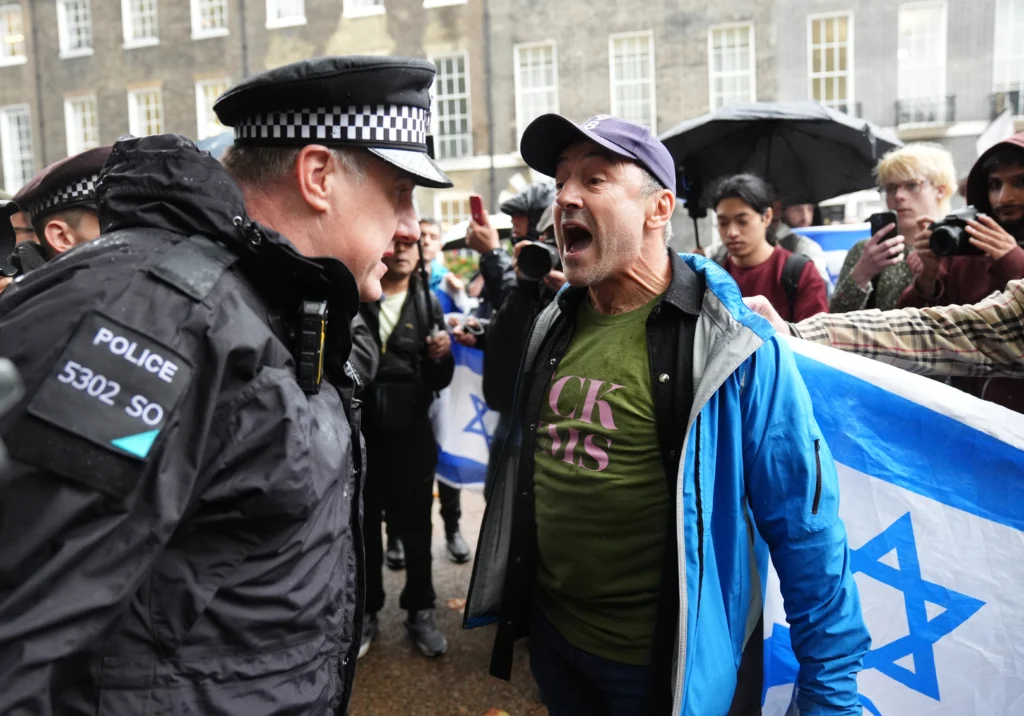

Chris Hobbs attends the controversial protest and counter protest to mark the 7 October attacks in Israel.
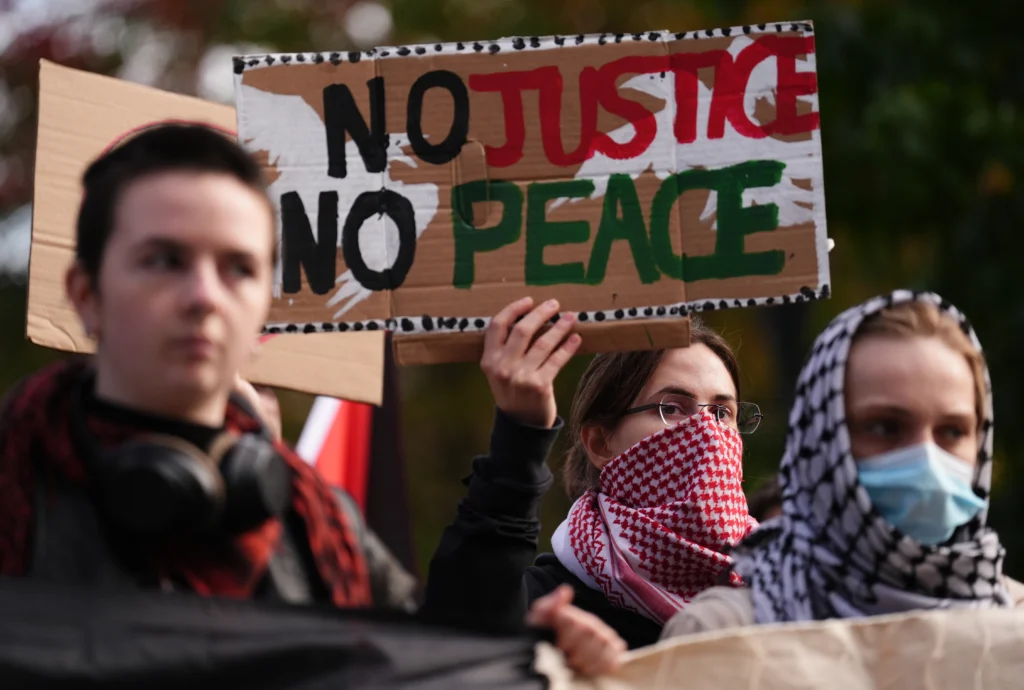
The decision by students to march on the third anniversary of the 7th of October massacre attracted considerable advance media interest together with controversy as demands were made for the march and rally to be cancelled.
The Met were pilloried for not cancelling the event, but firmly pushed back pointing out that they didn’t have the ability to do so due to the fact that the threshold, in terms of potential violent disorder, had not been reached. Whilst the Met’s decision subsequently proved to be the correct one in terms of the legal framework that exists, strict conditions were imposed on the march and rally.
The starting point was Lincolns Inn Fields at midday and the army of camera crews and press photographers must have wondered what all the fuss was about as, by my estimate, just 100 pro-Palestinian activists materialised; the Met’s estimate was 60. The poor turnout led to speculation that even those sympathetic to the Palestinian cause felt that protesting on this infamous anniversary was a bridge too far.
Nevertheless, a predictable media created rugby scrum ensued as the march left the meeting point at Lincoln’s Inn Fields. The procession then walked north along Southampton Row before turning left towards the entrance and intended rally venue within the green spaces of Russell Square. The protesters used umbrellas to shield themselves from the media and officers yet despite their best efforts at concealment, several warnings in respect of masks were given. In front of the march, two ‘patriotic allies’ of the soon to be encountered counter-protesters, were clearly visible due their being draped in Union flags. They were, however, ignored by those marching behind.
Chaos and confusion at Russell Square
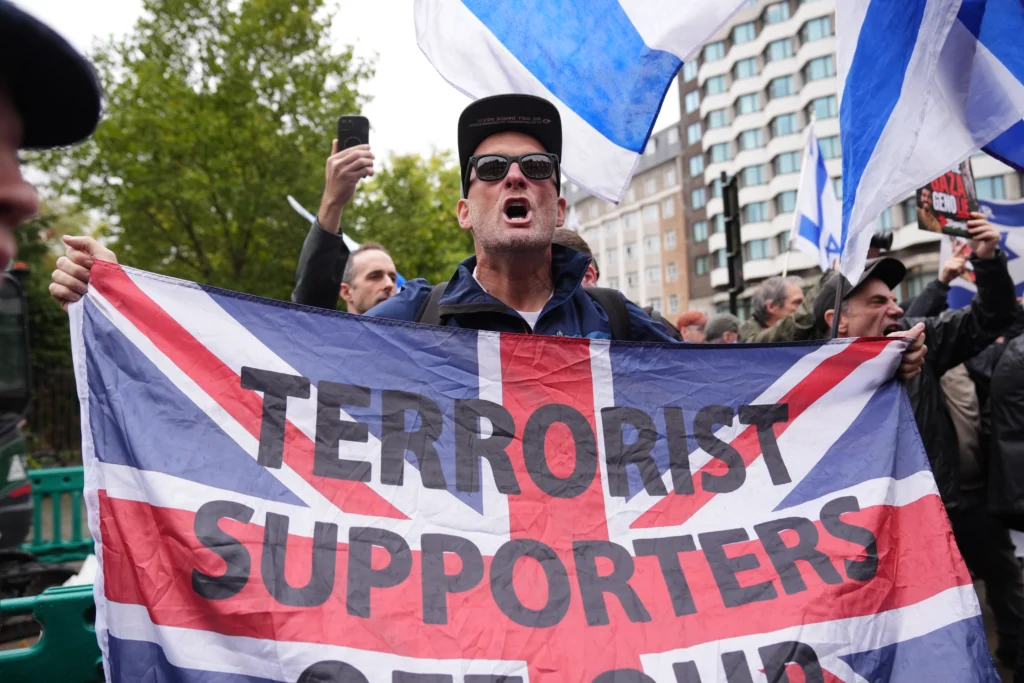
At the Southampton Row junction with Russell Square matters took a turn for the worse when the march was effectively blocked by a lady with an Israeli flag accompanied by a male. She refused police requests to move as more pro-Israelis appeared together with additional ‘patriot allies.’ Abuse and insults abounded as it became clear that the pro-Palestinians would be unable to gain access via that entrance to hold their rally.
Amidst growing confusion, the pro-Palestinians turned left hoping to gain entry to Russell Square via another gate, however the pro-Israelis, who appeared to be mainly from the antisemitic Stop the Hate group, together with their allies, dogged their footsteps.
Halfway along the road the plethora of photographers and camera crews were able to observe the arrest of a pro-Palestine protester, apparently for refusing to remove his mask.
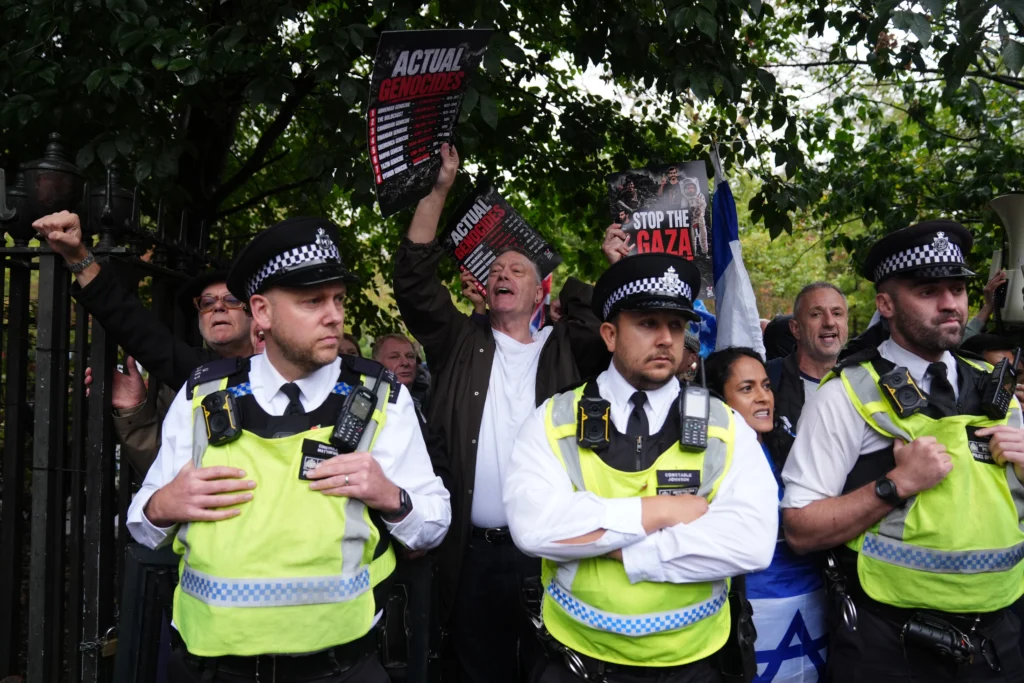
As the chaos reached the second gate it became clear that the marchers were again going to be unable to enter due to the visible opposition blocking their route. The result was that both groups were milling about the road as police tried to bring some degree of order to the situation by forming cordons.
In fact, the mingling of both groups led to the pro-Palestine marchers being confronted and subjected to predictable abuse. One individual who displayed a large Palestine flag at the end of a long pole, came in for particular attention.
Pro-Palestinians withdraw
As hostility towards the pro-Palestinians increased, many opted to leave the Square. One group, consisting mainly of female students, drew attention to themselves by virtue of being in the company of the individual with the Palestinian flag on the long pole. Many of the young pro-Palestinian students were identifiable due to their wearing of the keffiyeh scarf or hijabs or both. The above meant that those withdrawing were followed by pro-Israelis/patriotic allies which resulted in verbal abuse and intimidation. At this stage, police were unaware of the developing situation but fortunately two officers saw the potential for disorder and decided to accompany the volatile crowd.
The two-handed push technique
Two police evidence gatherers complete with cameras then joined the throng in order to both assist their colleagues and capture events which could be used in evidence at a later date.
Eventually, a number of the pro-Palestinians were ‘headed off’ by their rivals and looked, frankly, terrified. One of the males who had been hurling abuse suddenly lunged towards a female and was thwarted by a police officer who used the two-handed push technique to send him backwards.
More officers, who’d heard of the developing situation on their radios, arrived and both groups decided enough was enough and melted away. A return to Russell Square saw a much calmer situation.
Events elsewhere and the future
Earlier that morning, five people were arrested for inciting racial hatred after shouting and chanting slogans calling for “the intifada” during a “spontaneous protest” outside the Jewish Board of Deputies offices in Camden. In all, during the day, eleven arrests were made and, despite the issues referred to above, there was not the merest hint of mass violent disorder which would have justified a total ban.
Later that evening in Whitehall, a vigil commemorating the dreadful events of the 7th of October, which was organised by Board of Deputies and other Jewish organisations, passed off without incident.
One interesting debating point arising from the above-mentioned events is whether, in these days of VAWG concerns, females including those in their teens, who hold views that may be abhorrent to the majority of us, can justifiably be subjected to intimidation, abuse, insults, threats and even assaults: Perhaps a question more suited to the BBC’s Question Time?
The Met now face their third challenge of the week when this Saturday, they police yet another large Palestinian Solidarity Campaign march and rally in central London together with possible counter-protests by pro-Israeli groups.
Chris Hobbs is a former Special Branch officer who follows protests as an observer for Police Oracle.
Category: Public Order
Advertisement
Job of the week
Police Sergeant – Ascension Island
- Ascension Island Government
- Ascension Island
- £23,968.00 per annum plus food and utilities allowances, free housing and other benefits
This is a unique opportunity to take on a key operational role within the Royal St Helena Police Service on Ascension Island. Working closely with and supporting the Police Inspector, you’ll help provide effective day-to-day supervision, maintain high professional standards and ensure the team delivers a responsive and community-focused policing service. You’ll be a visible and approachable presence for both colleagues and the wider community, offering guidance, making sound operational decisions and helping officers develop their skills and confidence. This is a varied, hands-on role for an experienced Sergeant who enjoys supporting leadership, strengthening a team and making a genuine difference within a close-knit island community.
Read moreCoffee break