Article
Eyewitness: As the 20th of November looms, concern at the absence of protest police
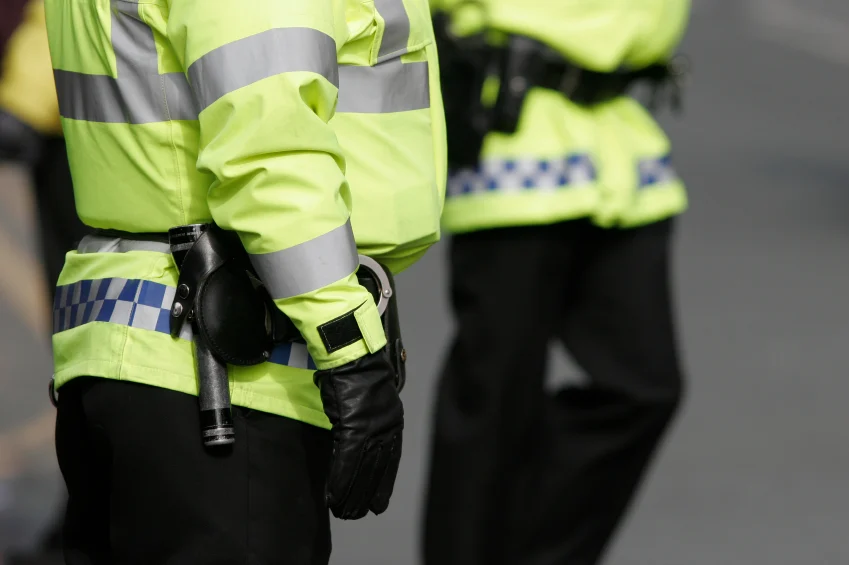

Chris Hobbs attends a pro-Palestinian protest where there was no police presence.
This was yet another Palestine linked ‘emergency protest’ which was a direct result of Israel’s actions on the West Bank following the killing of two IDF soldiers. There had been no publicised directions from the Met but the protesters congregated in the usual designated area directly opposite the Downing Street gates.
Another strange aspect of these emergency protests can be seen with the existence of two apparently competing protest groups. The presumably official organisers arrange a stage and a number of prominent speakers which, on this occasion, included Jeremy Corbyn. However, a second more youthful group frequently materialise towards the rear of the protest and with the aid of a megaphone, indulge in their own chant fest which inevitably intrudes into the speeches.
This peculiar situation wasn’t unusual, however something else was not quite right and it soon became apparent that there was a distinct shortage of visible police officers other than the usual armed police behind the gates of Downing Street.
Further observations established that not only was there a distinct shortage of officers; there weren’t any. I checked my watch and it was 6.30 PM so the protest had been underway for thirty minutes yet the only individuals visible in ‘high viz’ were stewards. I half expected several police carriers to arrive at any time but as the rally progressed, no carriers or officers appeared.
Repercussions resulting from an absence of police
Despite my misgivings, the rally continued unabated, but then, on a central reservation that divides much of Whitehall, some sort of scuffle was taking place. I started to film it using my phone as stewards moved to intervene. Arguments ensued, but in the darkness, I couldn’t make out what was taking place. After a few minutes, the issue appeared resolved, but I was then approached by a female masked protester who seemed to know me. She removed her mask and asked me where the police were.
It appeared that during the fracas her female friend was the victim of an alleged ‘religiously aggravated’ assault. Fortunately, the victim wasn’t injured and, to use police ‘parlance’ suitable advice was given.
The rally ended shortly afterwards and, in the absence of police, some protesters spilled into the road blocking the lane that led from Parliament Square to Trafalgar Square. Buses were now being obstructed and those responsible were waving to others to join them. In fairness, most declined the offer. After a few minutes, the group causing the obstruction, began walking slowly towards Trafalgar Square followed by buses and other traffic who had to travel at a snail’s pace.
On reaching Trafalgar Square, the protesters blocked traffic again and incurred the wrath of numerous taxi drivers and other motorists resulting in a cacophony of sound before they decided to withdraw. There was still no police presence.
It was when travelling home on the ‘Lizzy Line’ that I received a message stating there had been some form of disorder at the Ballon d’Or presentation which was being held at the Palladium Theatre near Oxford Circus. Initially reports suggested that over enthusiastic football fans and pro-Palestine protesters had attempted to push their way through the barriers and Met officers had to vigorously intervene. Given the timeline, it’s unlikely but not impossible that some pro-Palestinian’s attended both the protest and the Ballon d’Or.
Urgently redeployed?
On seeing the message, I assumed that officers who were originally tasked with policing the Whitehall event had been diverted to the Palladium: It would have been unusual to completely denude Whitehall of officers in these circumstances, however it may have been that the significant levels of violence directed against officers and security staff at the Palladium meant that additional officers were urgently redeployed to that location to assist colleagues.
At past pro-Palestinian protests there has been vigorous opposition from pro-Israeli activists including the challenge presented by ‘inserts;’ a small group who deliberately insert themselves amongst their rivals attempting to provoke a reaction. At all significant pro-Palestinian protests opposed by pro-Israeli counter protesters, police have to deploy sufficient resources to preserve order.
If, on this occasion, a significant number of pro-Israeli counter-protesters had materialised in a Whitehall devoid of police but containing several hundred pro-Palestinian activists, then the consequences could have been serious. However, public order commanders have to take difficult decisions and the redeployment of officers from policing events in Whitehall Whitehall may, perhaps, have been one of them.
A change of approach to public order policing?
The fact that no police were present in Whitehall gave a degree of credence to speculation that the Met were changing their approach to policing public order events due to the immense drain on resources that impacts upon both local policing, the welfare of officers and the Met’s budget.
It appears that the Met have decided to ‘carry more risk’ in terms of policing public order which will surely mean numbers of officers performing aid duties will be reduced, perhaps to zero for certain events that previously would have deemed worthy of a police presence. Those compiling risk/threat assessments will be aware of potential pitfalls and indeed consequences if, as a result of these changes serious disorder results.
Having said that, there are numerous protests that take place each year without any police presence. These tend to be static while marches that take place on public roads require strict compliance with conditions which ensure the safety of the marchers and all road users.
French students, young communists and disorder
The presence of hundreds of youths in the vicinity of the Palladium referred to above, did result in significant disorder and involved some groups chanting pro-Palestinians slogans. Officers, called in the assist security staff, were pelted with missiles including steel bolts to the extent that protective ‘NATO’ helmets were donned.
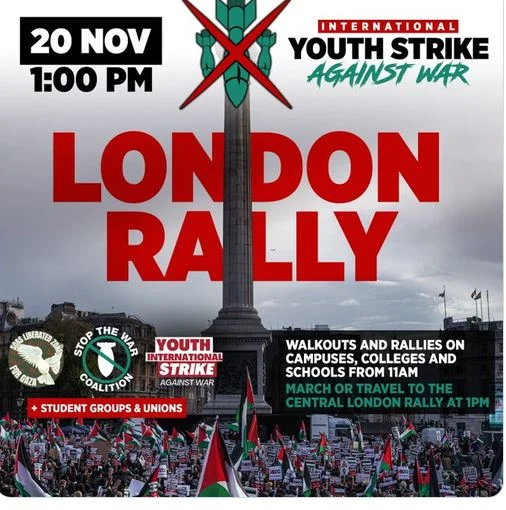
Interestingly, it would seem that a significant number of those prominently involved in the disorder were French students supporting Kylian Mbappe who ultimately lost out to Harry Kane. During the recent major Palestine Solidarity Campaign protest, some disorder occurred involving 200 young communists on the Embankment by the Battle of Britain monument. I, and others noted, that most of their chanting and conversations were in French and appeared identical to chants heard during news items featuring the disorder across France. This has led to the conclusion that a number of youthful French nationals may well be studying in the UK and are likely to take to the streets during the protests planned on Friday the 20th of November.
Rioting in France and across Europe dominated both mainstream and social media yet the UK remained relatively tranquil: However, announcements that Friday November the 20th has been earmarked for similar protests across the UK and Europe has provoked a degree of concern; conversely the advance notice has allowed more than adequate time for planning.
A precursive failure
Leftist social media announced that a precursor to the November 20 rally and march would be held on Sunday the 25th of October, beginning in Russell Square. I arrived expecting to see at least several hundred youthful leftist activists’ intent on vigorously promoting their revolutionary cause. In fact, a mere thirty materialised watched over by around a dozen officers. Clearly whoever compiled the Met’s risk assessment for this non-event, was spot on. Interestingly, a small number of ‘patriots’ assembled at the Churchill statue intending to ‘protect it’ from the youthful activists referred to above.
The pre-budget austerity march and the spectre of the 20th
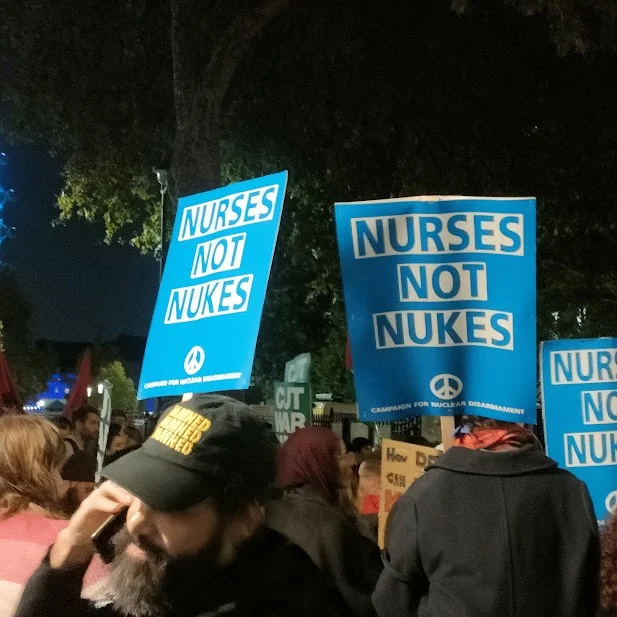
On Tuesday of this week, a leftist pre-budget, anti-austerity protest took place with participants assembling at the Embankment Station before marching to Whitehall where they held a rally. The marchers, several hundred strong, were accompanied by four officers who were deployed from Charing Cross police station and relations were amicable throughout.
The spectre of November the 20th however looms large. At present the intention of the shadowy organisers is to promote ‘events’ across the country which will inevitably stretch police resources. That the 20th is a Friday suggests that schoolchildren will be encouraged to leave school early and participate; mass gatherings of schoolchildren have proved problematic for police in the past. I recall being present in and around Oxford Street when social media announced the ‘looting’ of JD Sports which resulted in hundreds of schoolchildren and youths materialising.
To add to police concerns are pronouncements from individuals on the far right who are calling for counter-protests on that day
The 20th was also referred to at the above-mentioned pre-budget rally and current indications point to a challenging day, not just for the Met but for forces across the country and indeed across Europe. In the interim it will be interesting to see whether there is any public announcement from the Met which will confirm changes to the policing of public order events.
Chris Hobbs is a former Special Branch officer who follows protests as an observer for Police Oracle.
Category: Public Order
Advertisement
Job of the week
Police Sergeant – Ascension Island

- Ascension Island Government
- Ascension Island
- £23,968.00 per annum plus food and utilities allowances, free housing and other benefits
This is a unique opportunity to take on a key operational role within the Royal St Helena Police Service on Ascension Island. Working closely with and supporting the Police Inspector, you’ll help provide effective day-to-day supervision, maintain high professional standards and ensure the team delivers a responsive and community-focused policing service. You’ll be a visible and approachable presence for both colleagues and the wider community, offering guidance, making sound operational decisions and helping officers develop their skills and confidence. This is a varied, hands-on role for an experienced Sergeant who enjoys supporting leadership, strengthening a team and making a genuine difference within a close-knit island community.
Read moreCoffee break